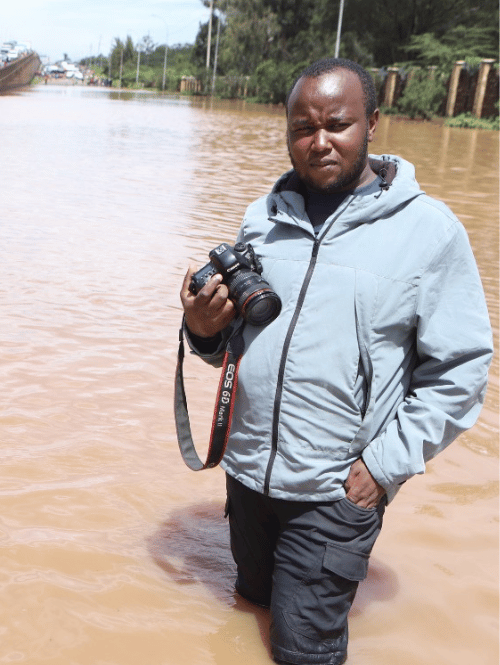
Hi, I’m Patrick Ngugi, a photographer based in Nairobi with a passion for storytelling that makes an impact. My work focuses on news and climate change photography—capturing the moments that matter, the stories that need to be told, and the realities that shape our world.
Through my lens, I bring to light the human side of global challenges, whether it’s covering breaking news or documenting the effects of climate change on communities here in Kenya and beyond. I believe that a single image has the power to inform, inspire, and move people to action.
Working with media outlets, NGOs, and other organizations, I aim to create visuals that resonate deeply and foster change. If you’re looking for powerful, story-driven photography, I’d love to explore how my work can help bring your vision to life. Feel free to take a look at my portfolio to see the world as I see it—or reach out if you’d like to connect!
Patrick Ngugi Photography
Hi, I’m Patrick Ngugi a Climate PhotojournalistEnvironmental StorytellerImpact Photographer
In my work, I use photography as a lens through which to reveal the urgent realities of climate change, guiding viewers through each image and every story. I don’t capture these moments just for visual impact, but to illuminate and simplify the complex ways climate affects our world
find with me On
Visit my portfolio & Hire me
About Me
I’m Patrick Ngugi, a Nairobi-based photographer specializing in powerful reportage that captures the real-world impacts of climate change. My work focuses on the effects of extreme weather, particularly flooding, and droughts in Kenya, to reveal the human and environmental cost of our changing climate. Each image tells a story to inspire awareness and action, bridging the gap between data and lived experience. I collaborate with NGOs, media outlets, and advocates to bring these urgent stories to light.
Let’s connect to explore how my photography can support your climate-focused projects.
I partner with NGOs and media to create visual stories that amplify climate advocacy.
Portraits in Climate Contexts
I highlight the resilience of individuals and communities facing climate change.
Look My projects & and Share Feedback
My Recent Work
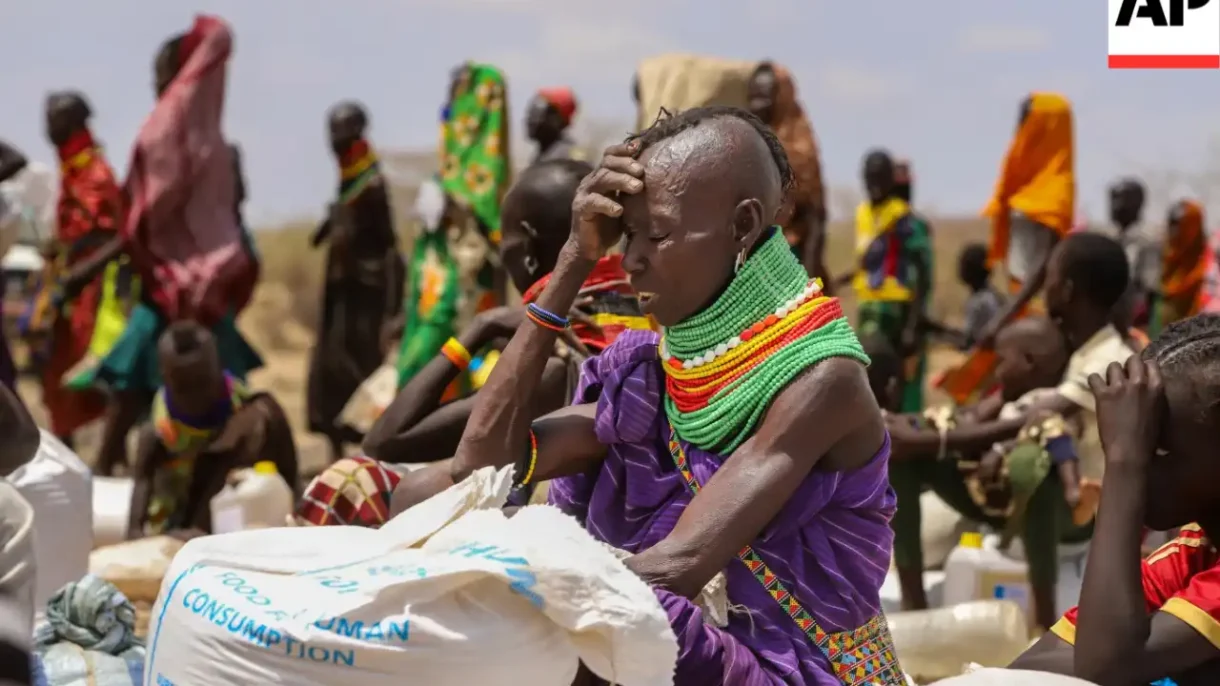
Kenya Drought - Turkana
Turkana County in northern Kenya is experiencing one of the most severe droughts in recent history. Failed rains, livestock loss, and water scarcity are disrupting daily life for pastoralist communities. I covered this Drought for the Ap and here are some of my findings.
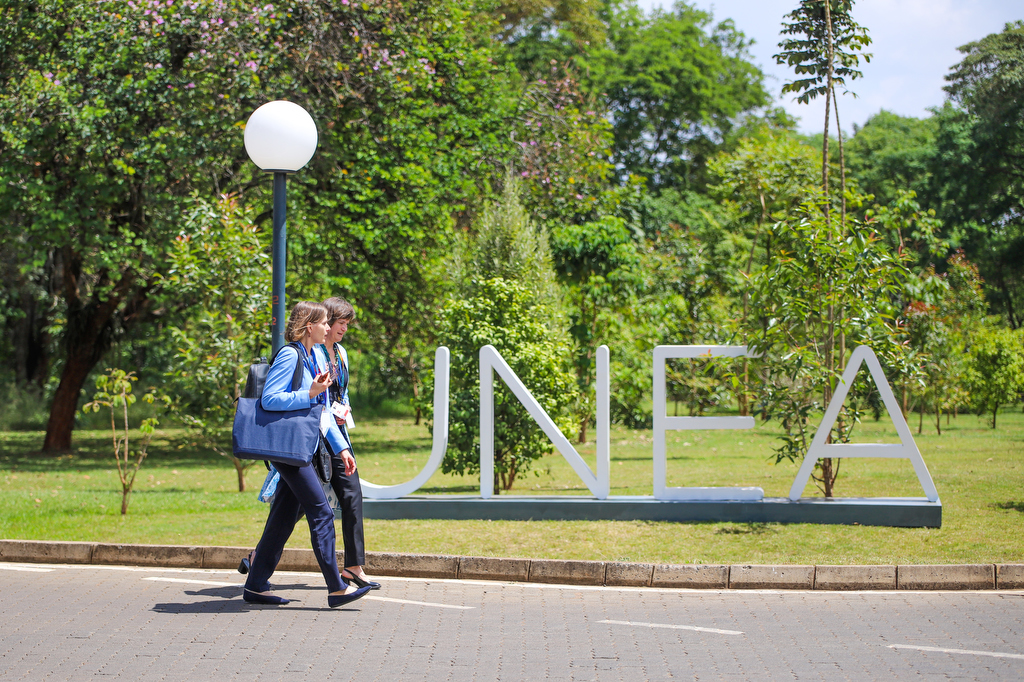
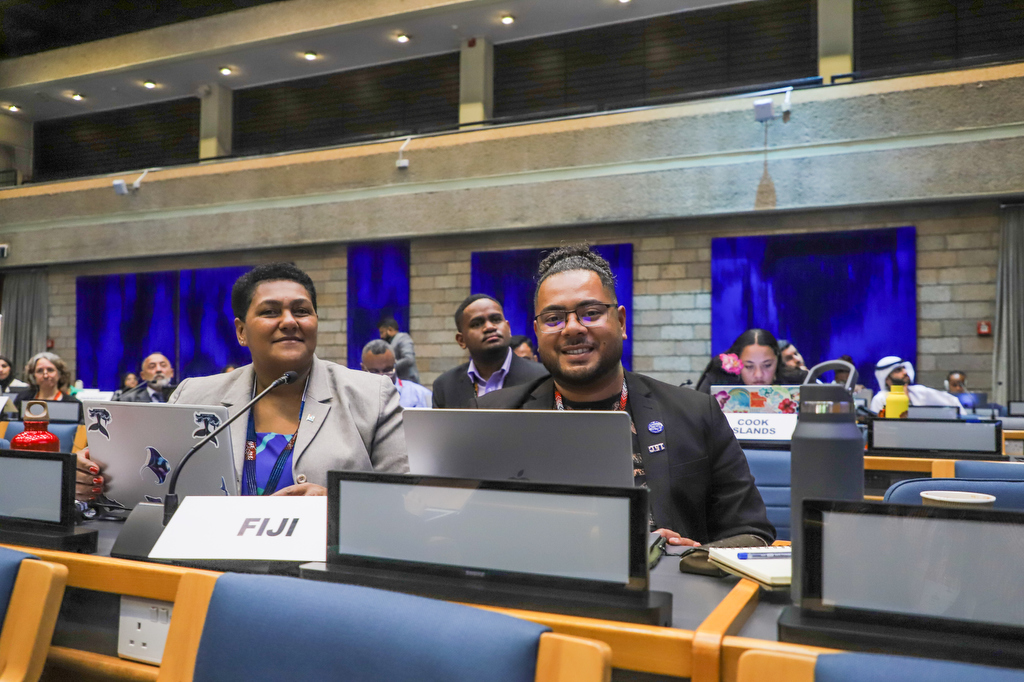
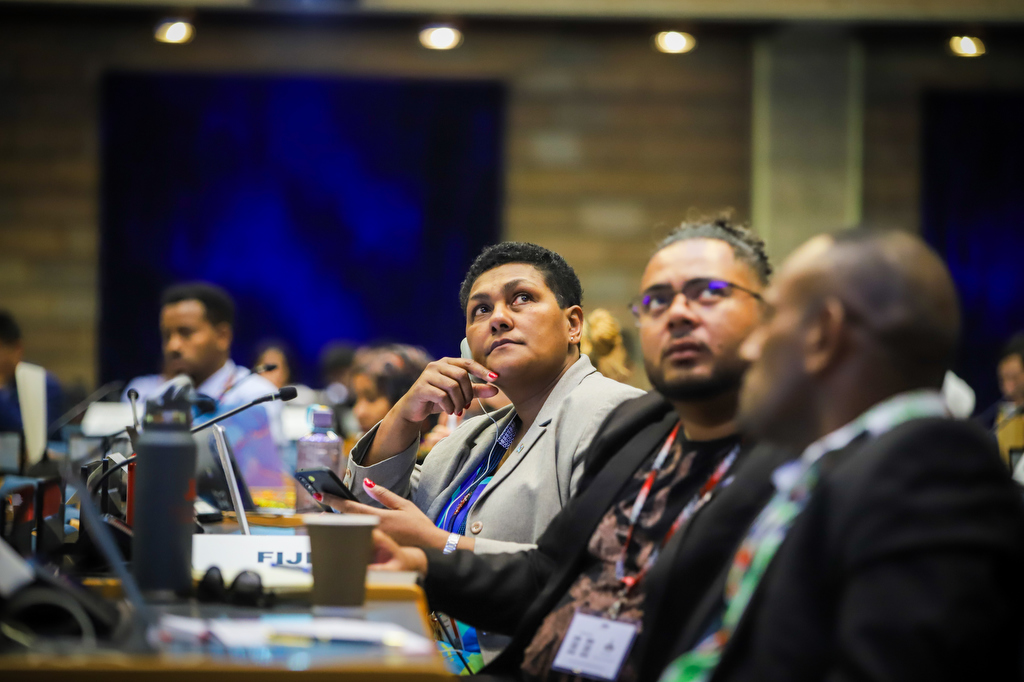
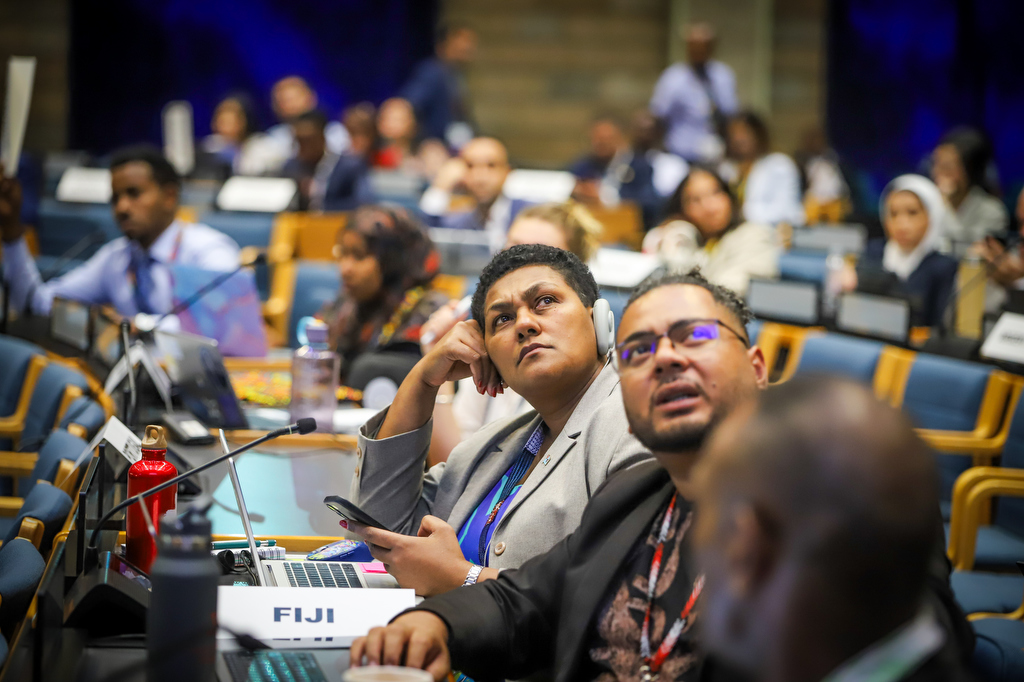
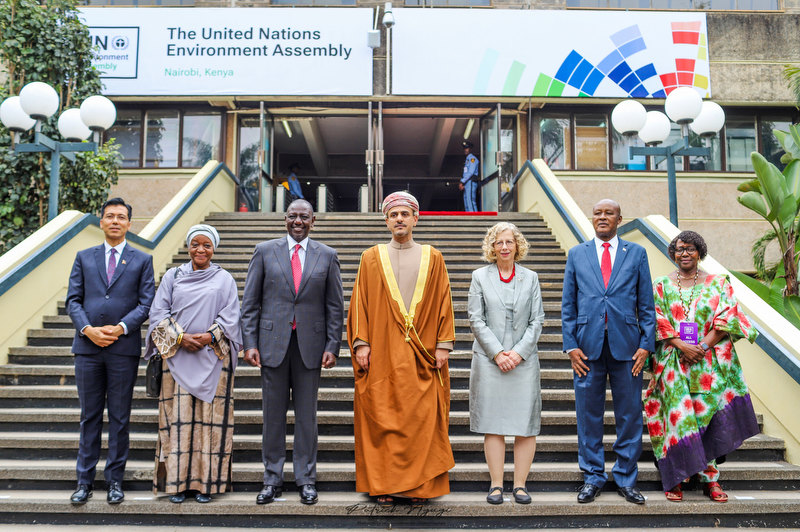
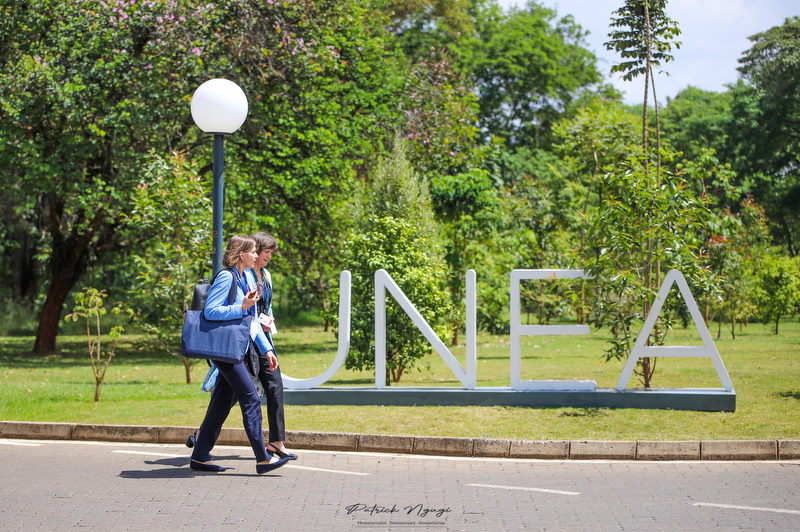
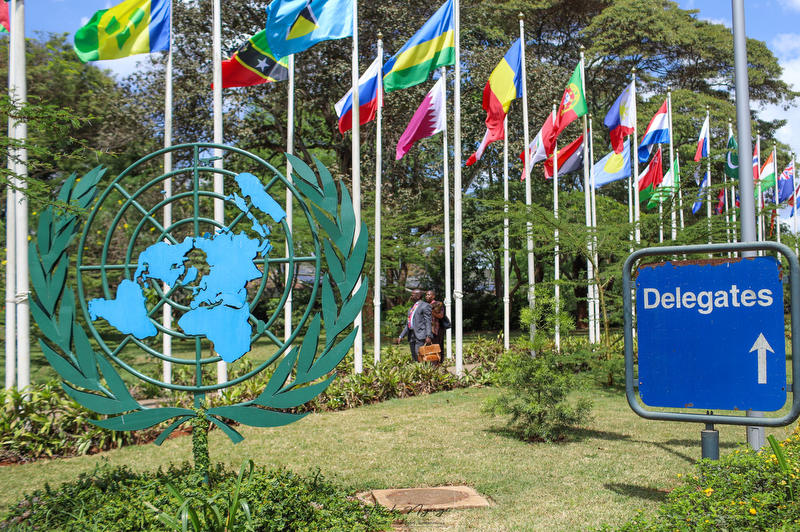
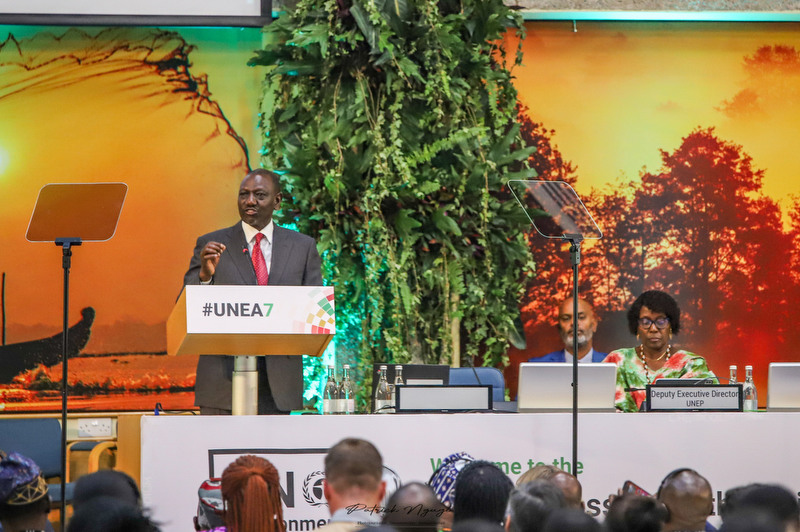
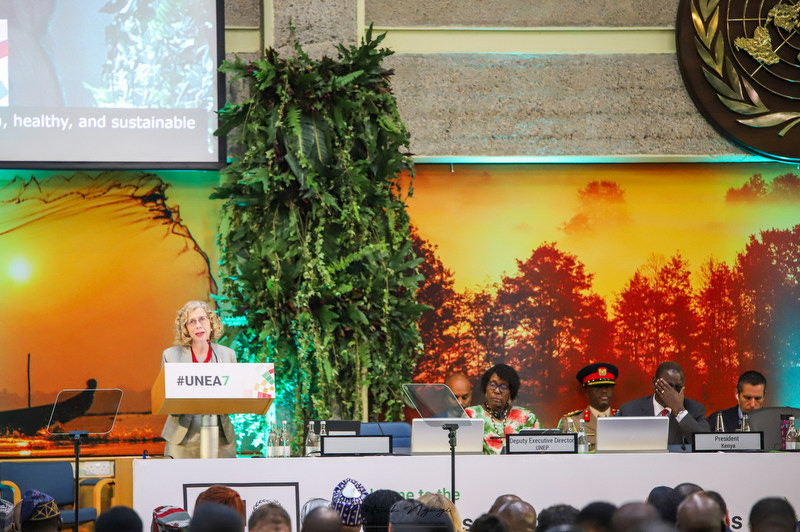
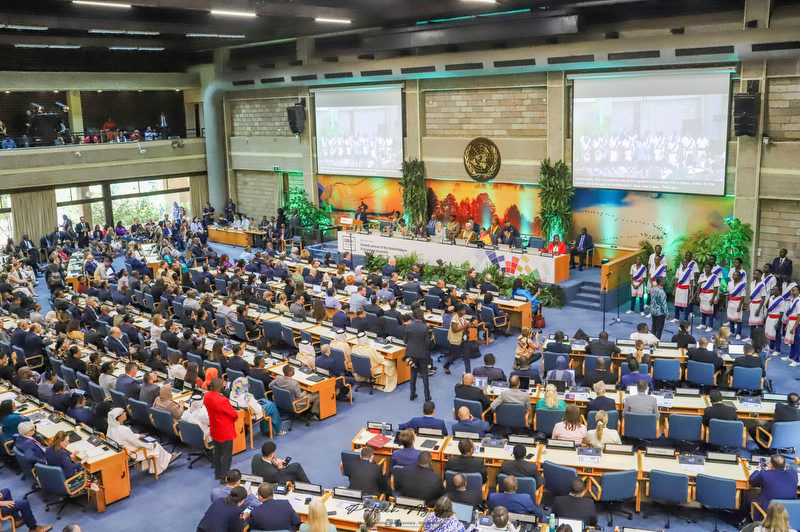
UNEA-7 is the world’s highest decision-making forum on environmental issues, bringing global leaders and stakeholders together in Nairobi to shape action on climate change, biodiversity, and pollution.
As a photographer on the project, I document key moments and human stories from the assembly, turning complex environmental diplomacy into clear, impactful visual narratives.
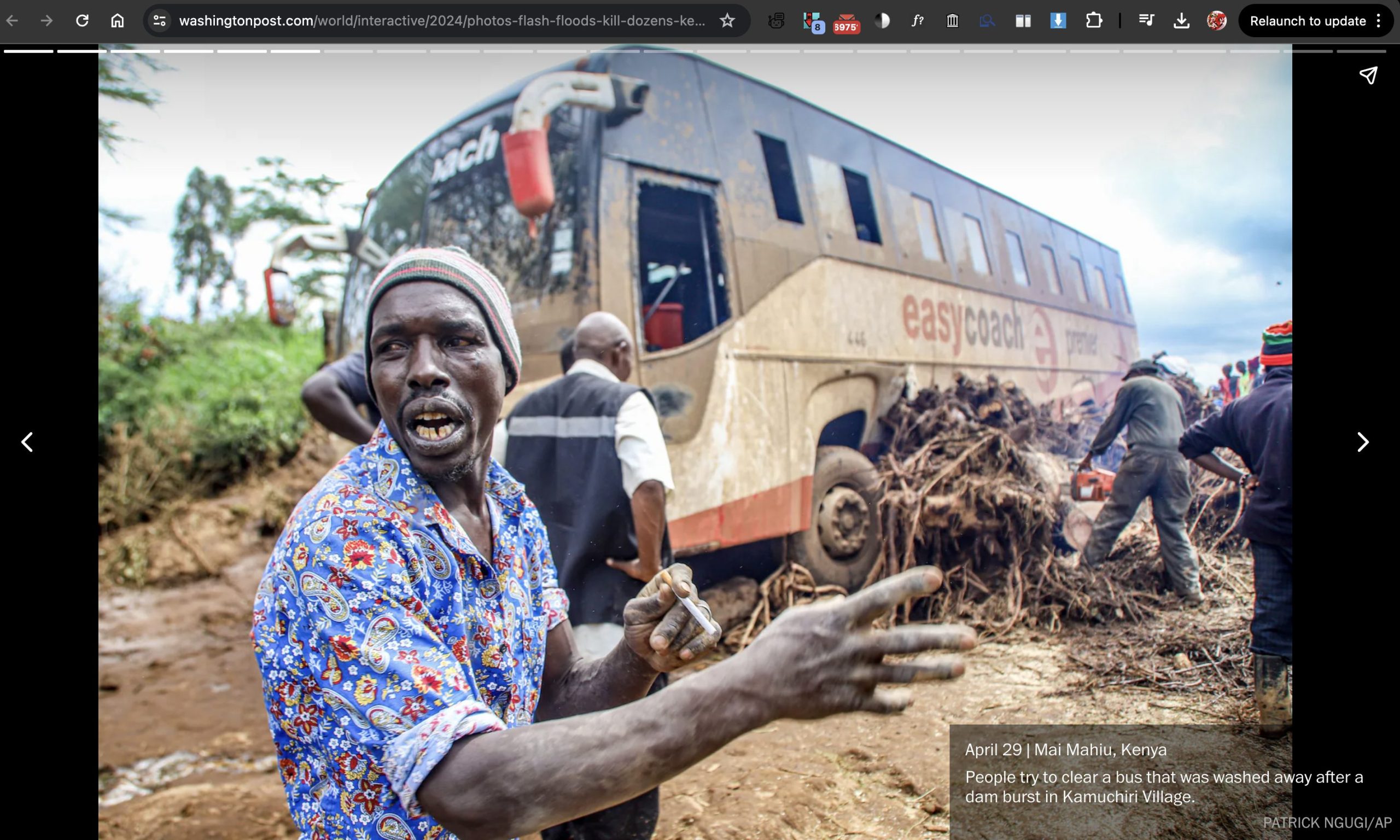
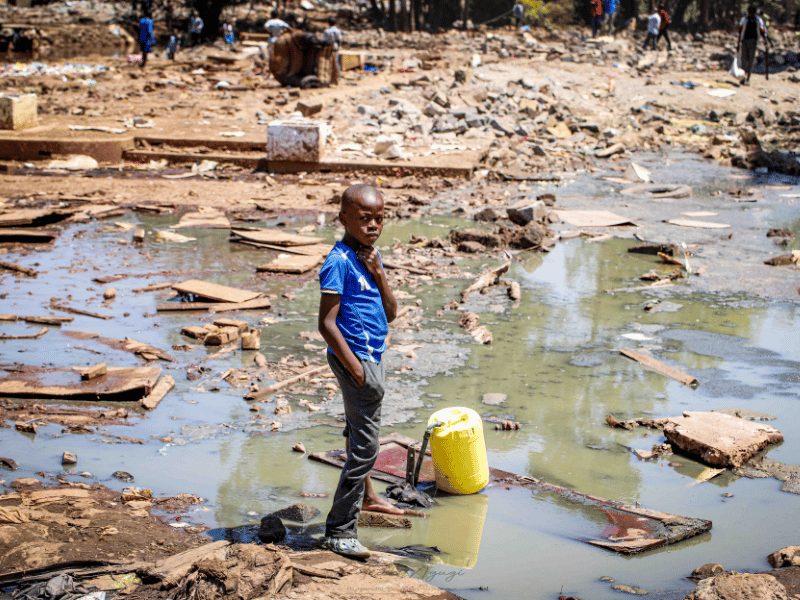
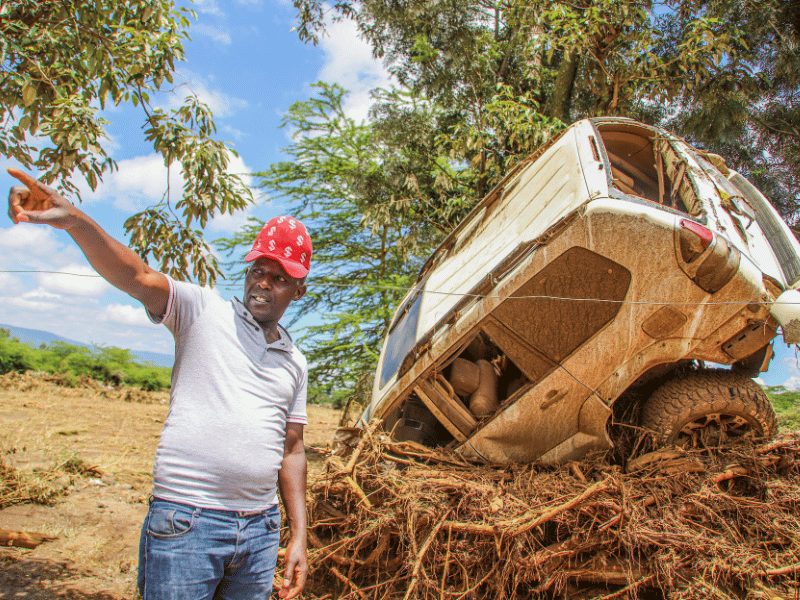
This series documents the devastating impact of recent floods in Kenya, which have led to a widespread cholera outbreak. Through stark and compelling visuals, I capture the challenges faced by affected communities, from contaminated water sources to overwhelmed healthcare systems, revealing the urgent need for sustainable solutions and immediate relief.
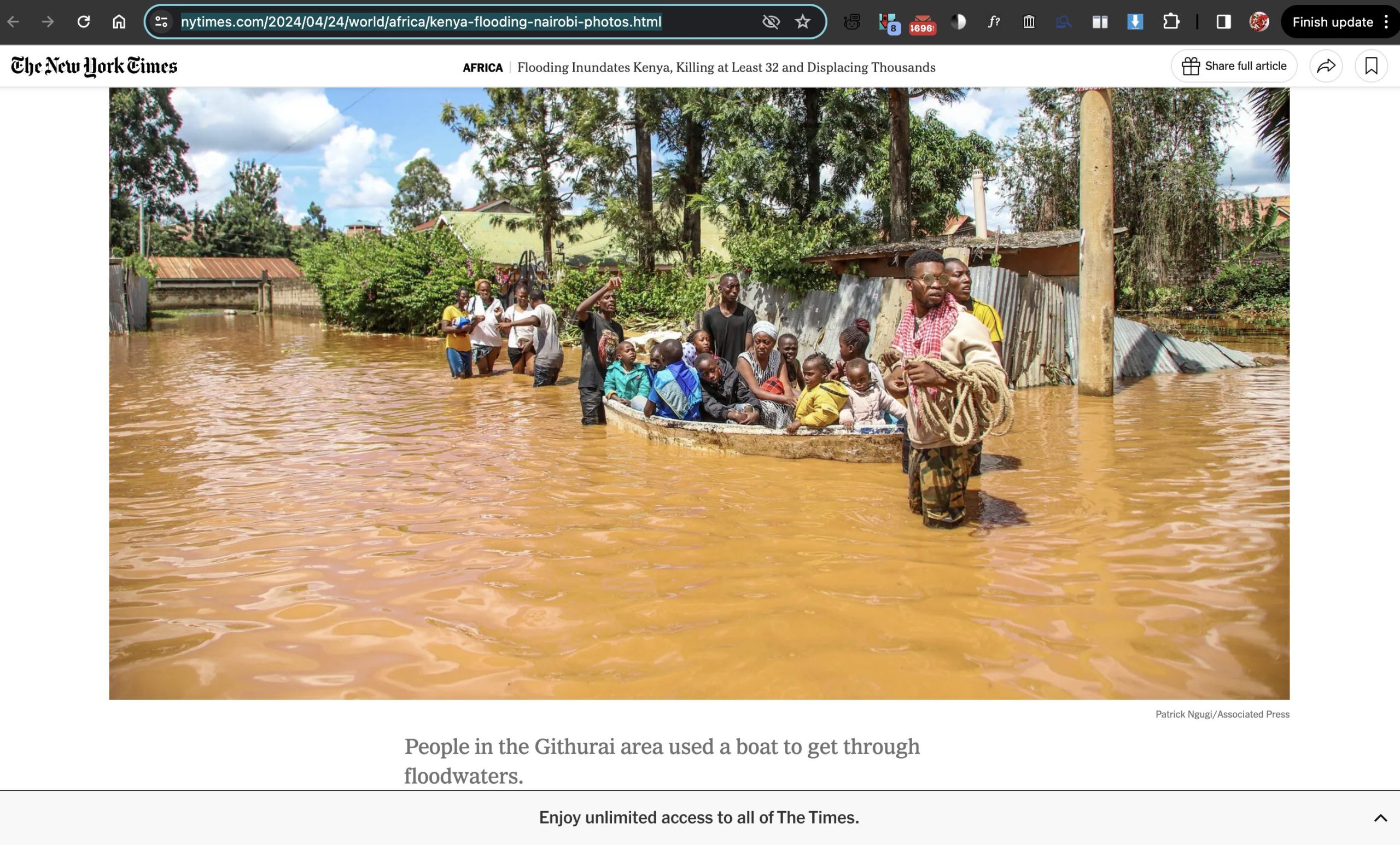
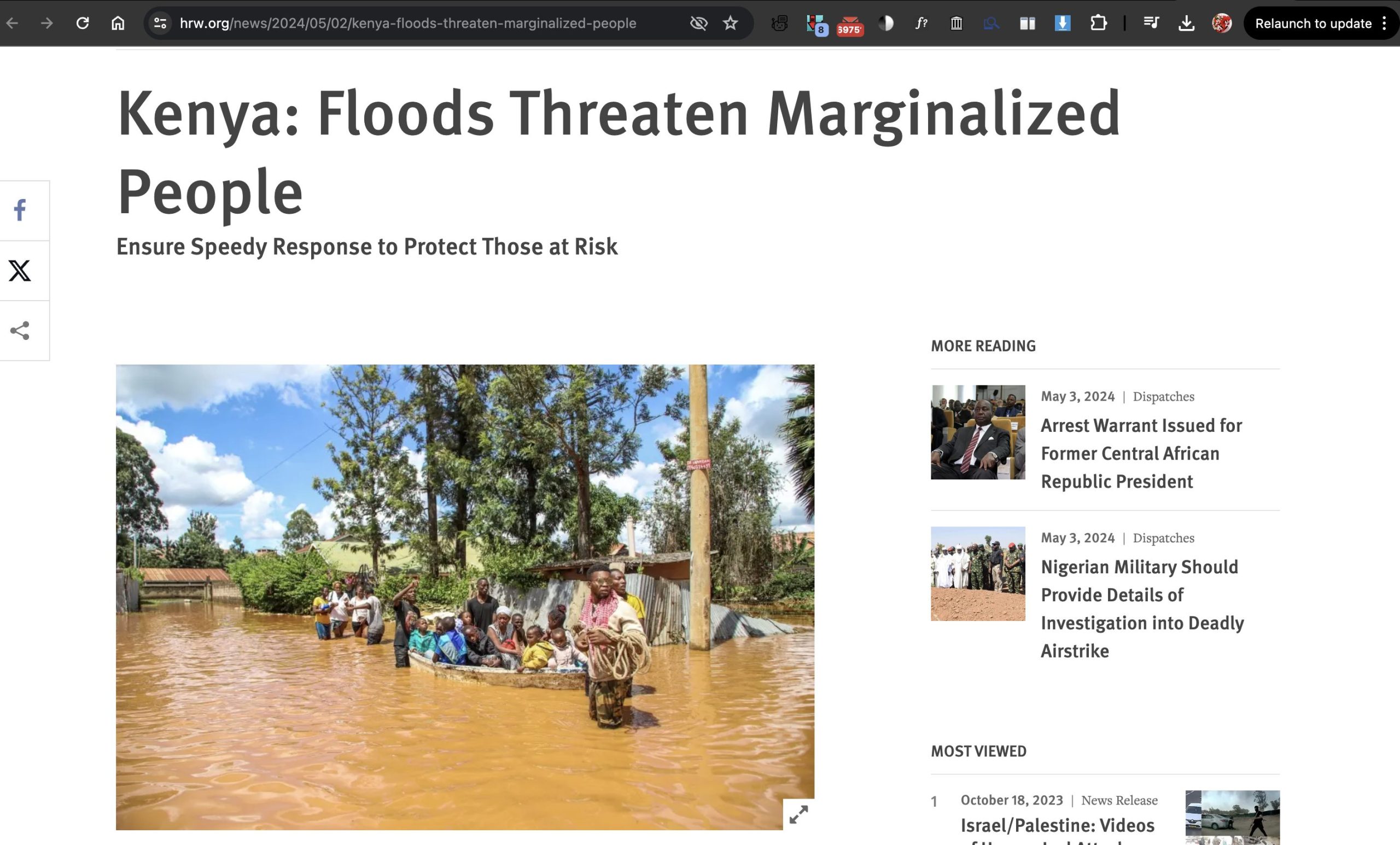
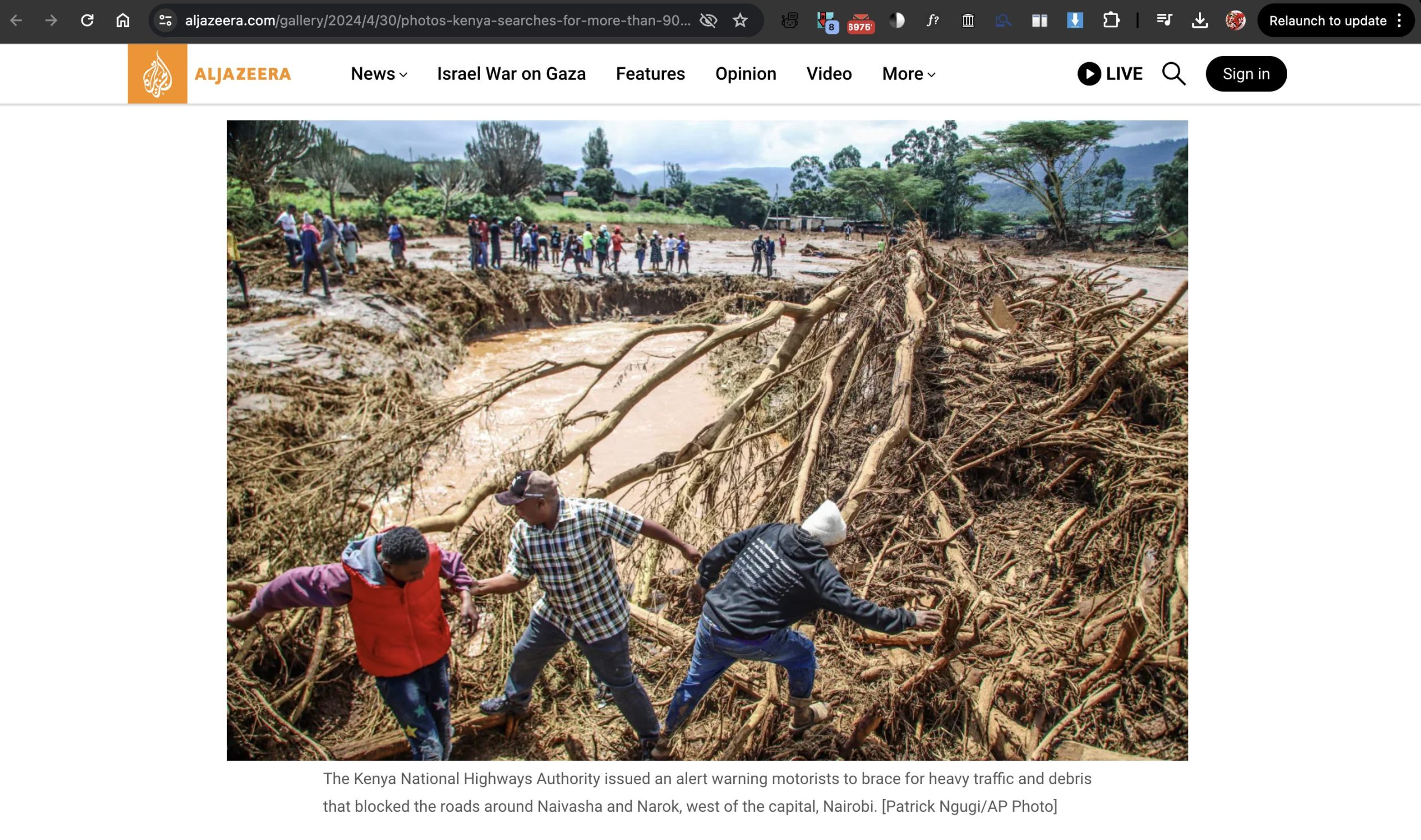
This series captures the severe flooding in Kenya, showcasing its devastating effects on communities, infrastructure, and landscapes. Through vivid imagery, I reveal the challenges of displacement, loss of livelihood, and the resilience of those impacted, highlighting the urgent need for climate adaptation and sustainable solutions.
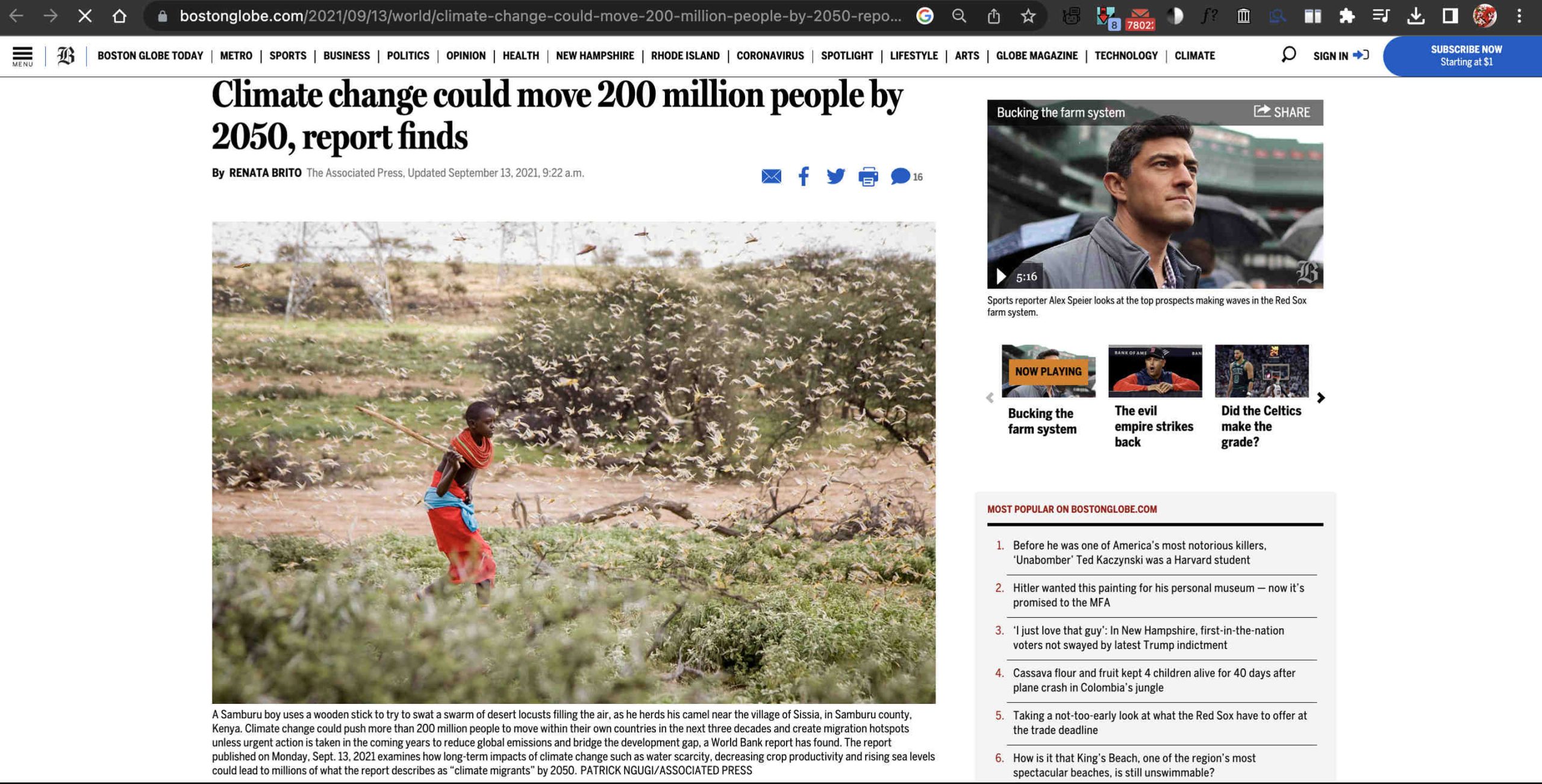
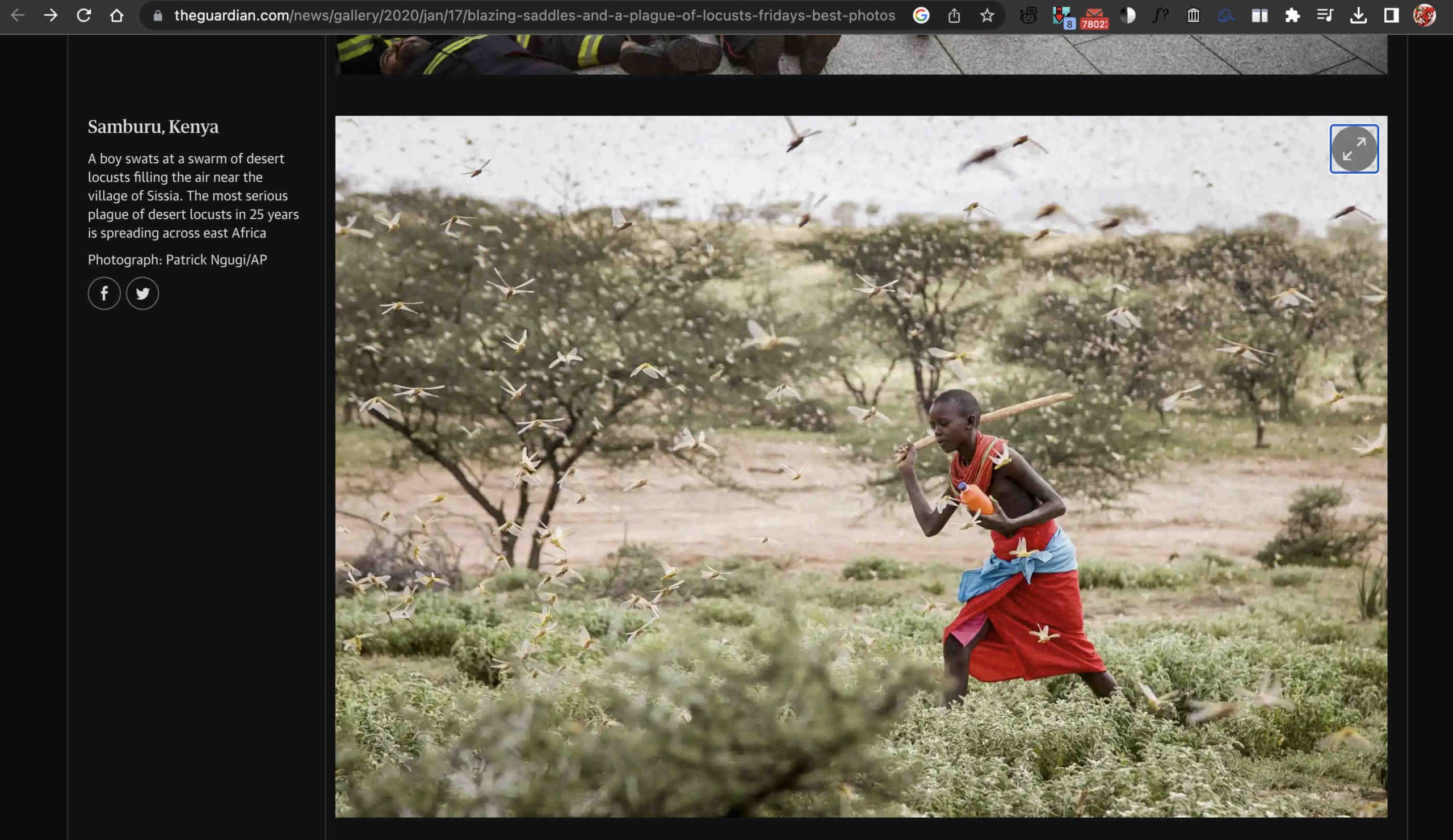
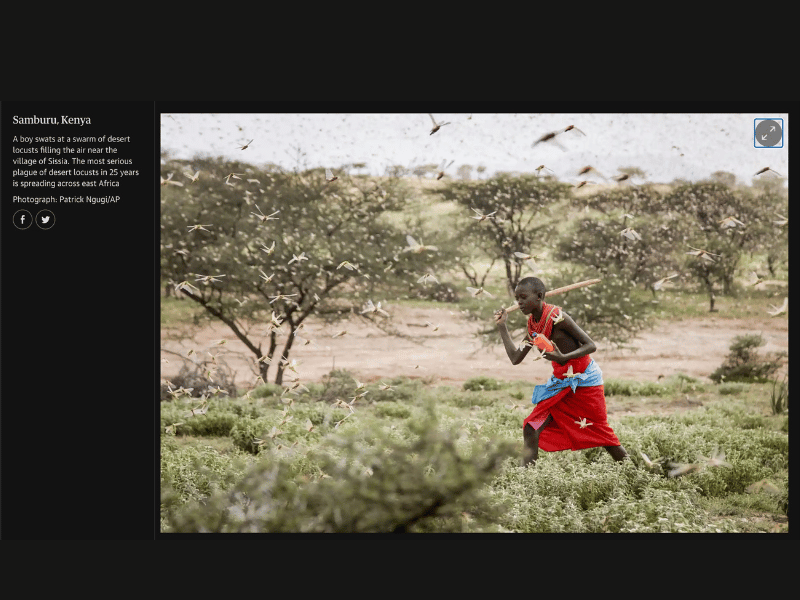
This collection documents the locust swarms ravaging Kenya's Samburu landscapes, threatening food security and livelihoods. Through powerful visuals, I captured the scale of devastation caused by these relentless desert locust and the resilience of communities grappling with this climate-driven crisis.
What the GEO-7 Means for Climate Change, Biodiversity, and Global Economies
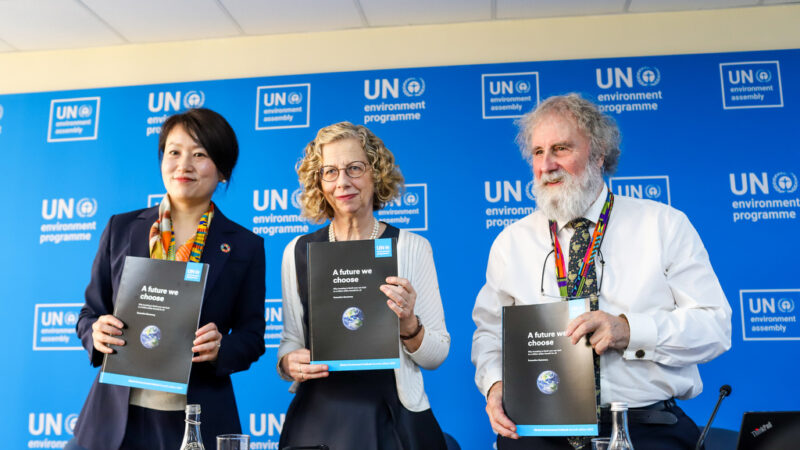
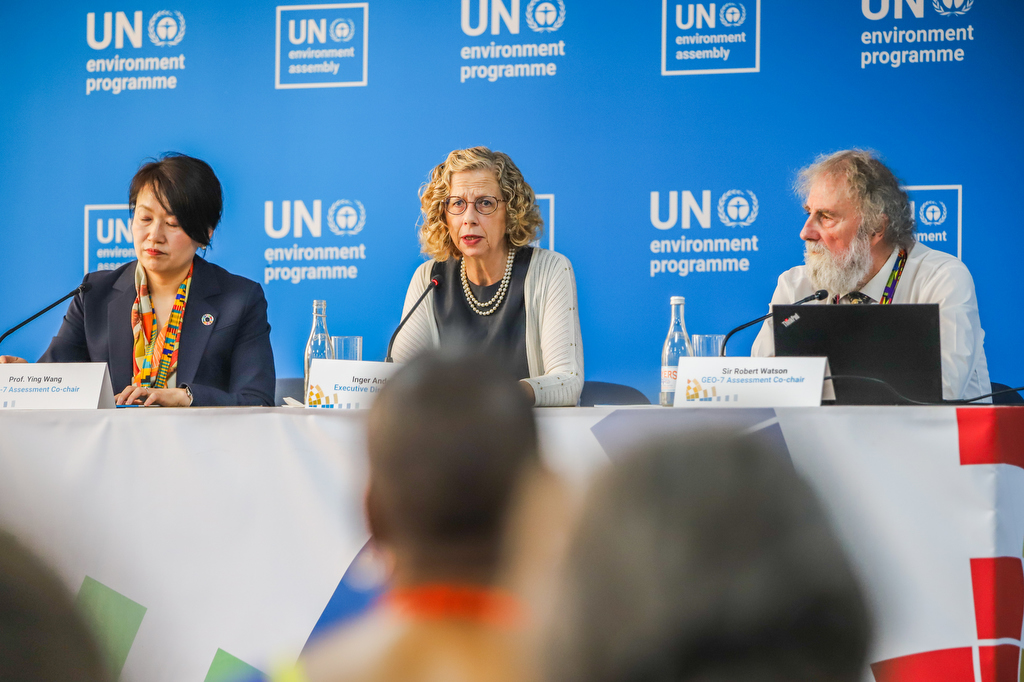
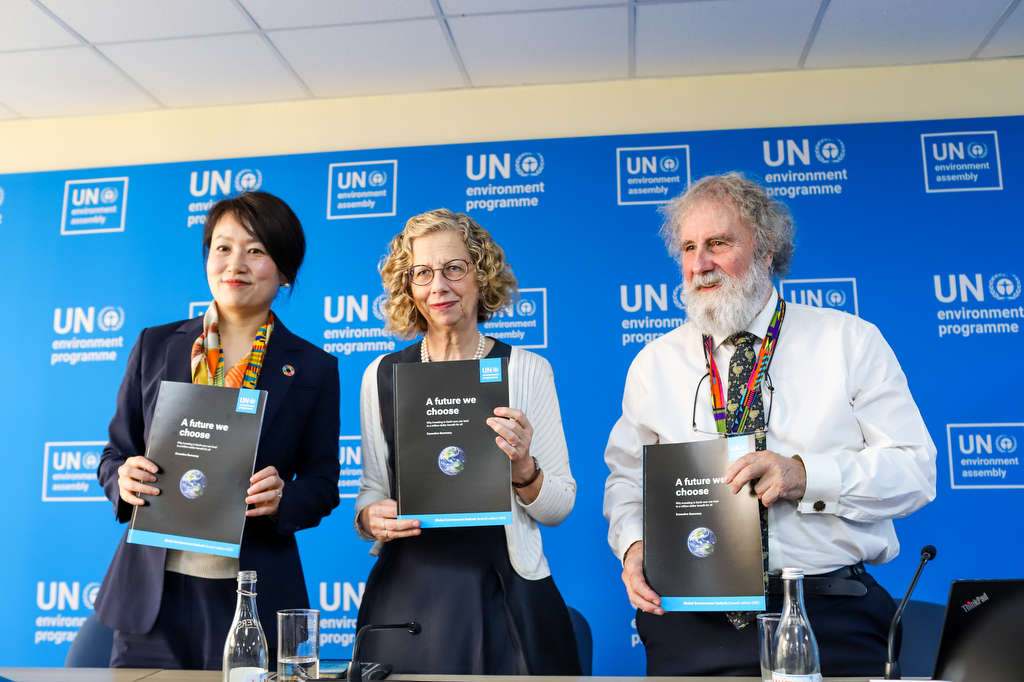
UNEA-7, DAY 2. Inside the UN Environment Assembly press room, three people walked to the podium carrying identical black-and-blue reports. They paused for just a second (long enough for the cameras to click) before the questions started flying.
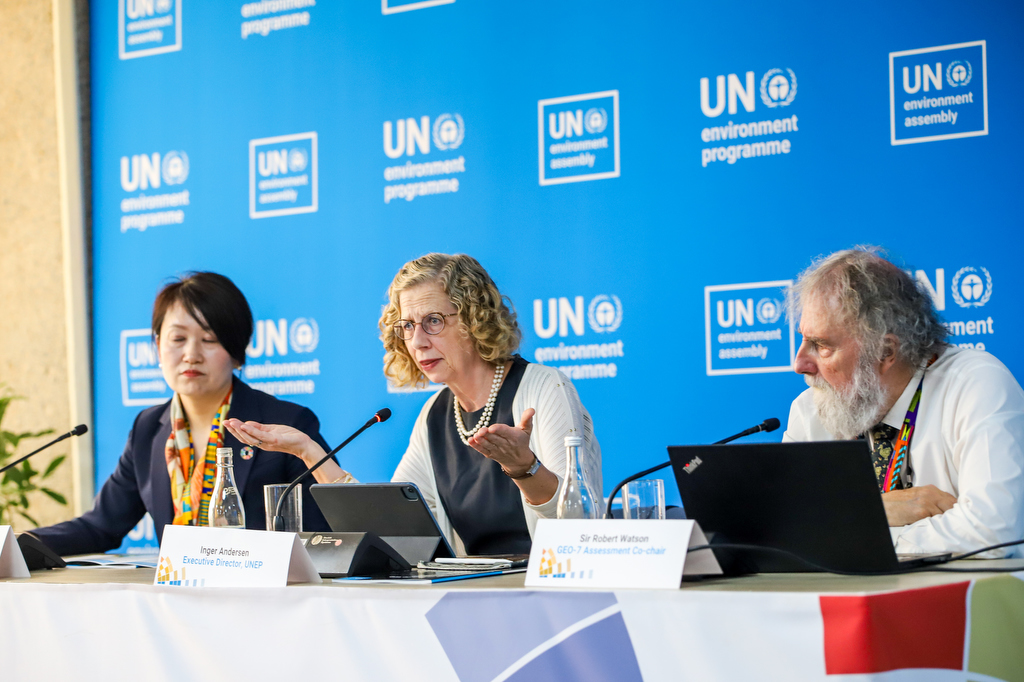
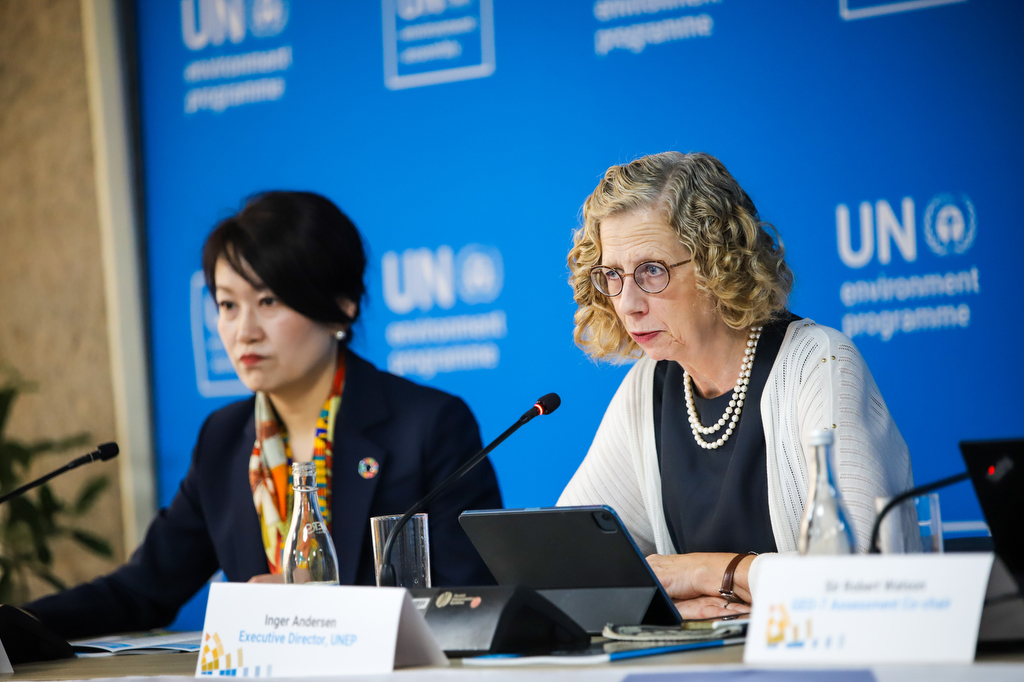
Inger Andersen, Executive Director of UNEP, addresses Members of the Media during UNEA-7 in Nairobi, Kenya
In the middle was Inger Andersen, head of the UN Environment Programme (UNEP). On her left and right were two of the scientists who spent years writing the report they were holding: the seventh Global Environment Outlook, or GEO-7 for short.
Inger got straight to the point.
“The future is not already written,” she said. “But the window to write a better one is closing fast.”
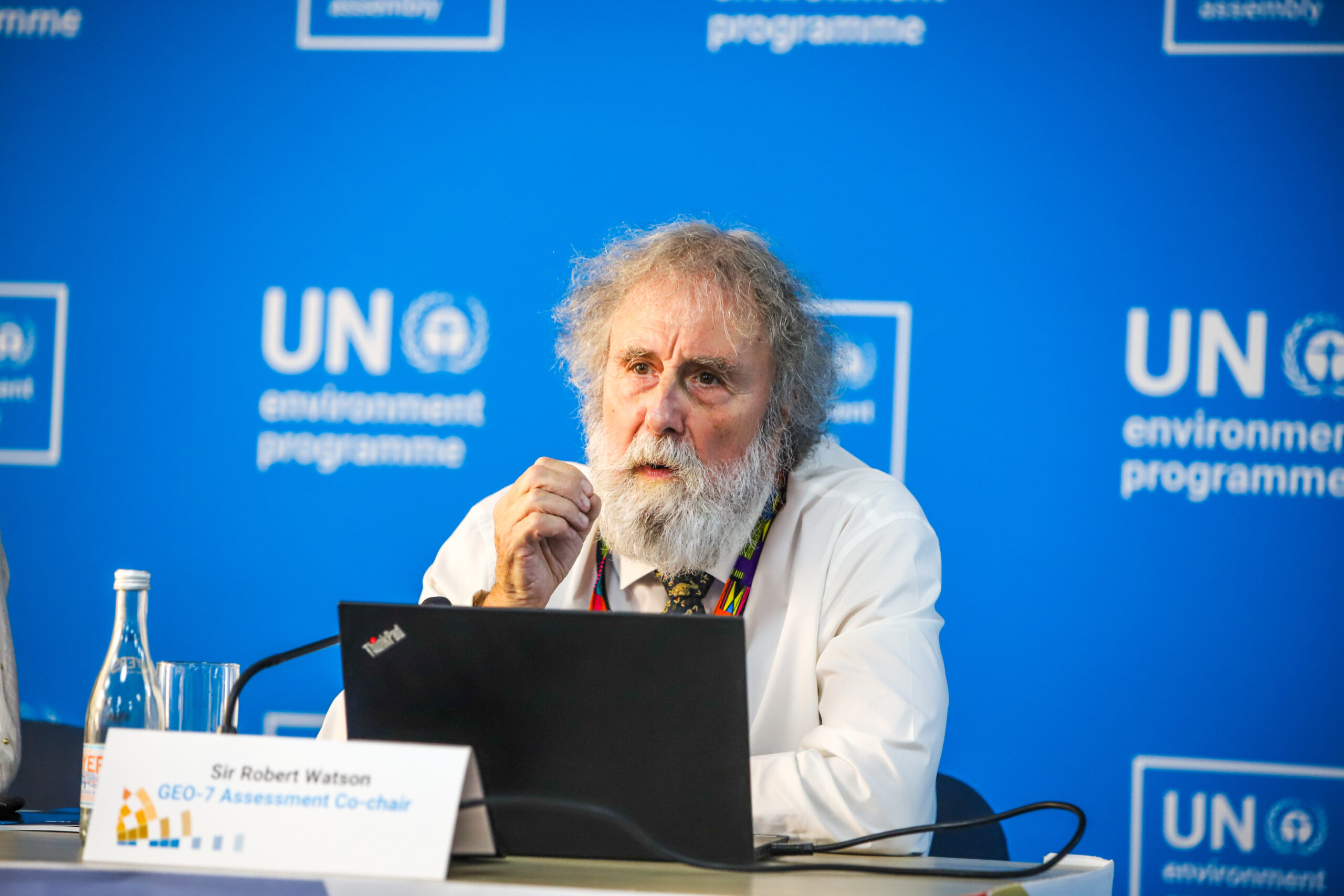
Sir Bob Watson (yes, the same Bob Watson who’s been warning the world about climate and biodiversity for over 40 years) stood next to her. He’s not one for drama, so when he spoke, everyone listened.
“If we get this right,” he said, “we’re not talking about saving a few billion dollars. We’re talking trillions (every single year) once we fix energy, food, materials, finance, and nature.”
The numbers in GEO-7 are brutal, but they come with a surprisingly hopeful twist.
Right now:
9 million people die every year from pollution.
40% of the planet’s land is degraded.
1 million species are on the brink.
Extreme weather is already costing us around US$300 billion a year (the report uses updated figures).
Keep going like this, and things get much worse.
Or we can change course.
The report maps out two realistic ways to do it: one leans hard on new technology, the other on changing how we behave. Either way, the big payoffs start showing up by 2050 (inside the lifetime of most people reading this).
If we make the shift, the world could see at least $20 trillion in annual benefits by 2070, plus millions of lives saved from dirty air, poisoned water, and collapsing ecosystems.
Bob Watson put the choice bluntly: “The cost of doing nothing is way higher than the cost of change. Always has been.”
taking photos, moving between the podium and the rows of journalists. What stayed with me wasn’t the slides or the statistics; it was the mood in the room. These weren’t activists shouting slogans. They were scientists and officials who’ve seen every climate meeting for decades, and they still sounded like they believed we can do this.
Sir Robert Watson, GEO-7 Assessment Co-Chair, Addresses Members of the Media on the New GEO-7 Report in Nairobi, Kenya during UNEA-7
Inger Andersen said the quiet part out loud:
“We already have the tools and the agreements. What we’re missing is the political courage to use them.”
It’s not a prediction of doom. It’s a menu. Two paths that work, laid out by 287 experts from 82 countries after six years of work. One path keeps heading toward breakdown. The other actually makes us richer, healthier, and keeps the planet livable.
We still get to pick.
Walking out of the conference hall, camera slung over my shoulder, I kept thinking the same thing:
This wasn’t just a report launch.
UNEA GEO-7 Report Launch
It felt like the moment the world was handed a map (and asked, very politely but very firmly, to choose the right road before the junction disappears).
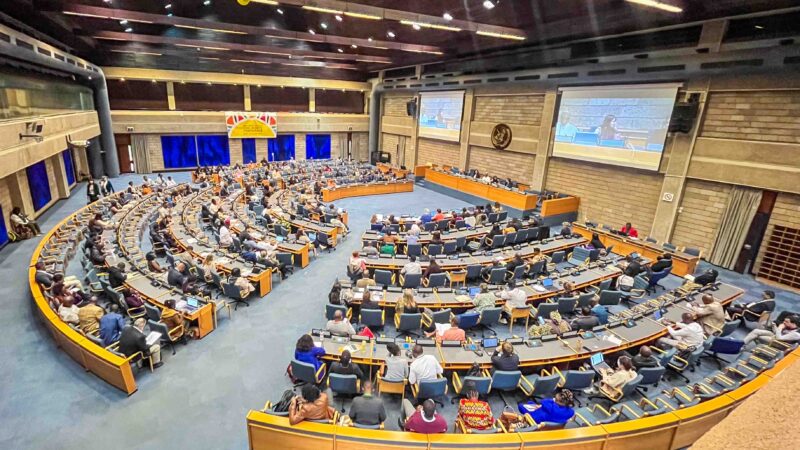
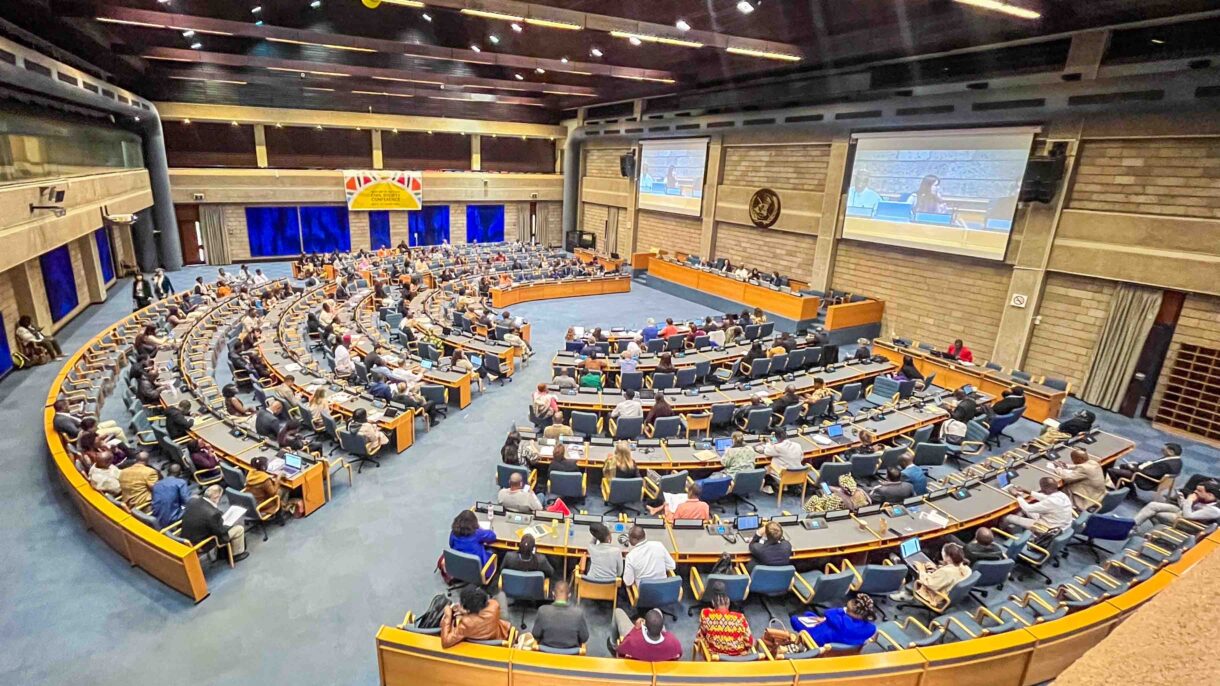
The seventh session of the United Nations Environment Assembly (UNEA-7), scheduled for December 8–12 in Nairobi, has not officially begun. But inside the United Nations compound at Gigiri, the negotiations are already underway, long before delegates take their seats for the formal opening.
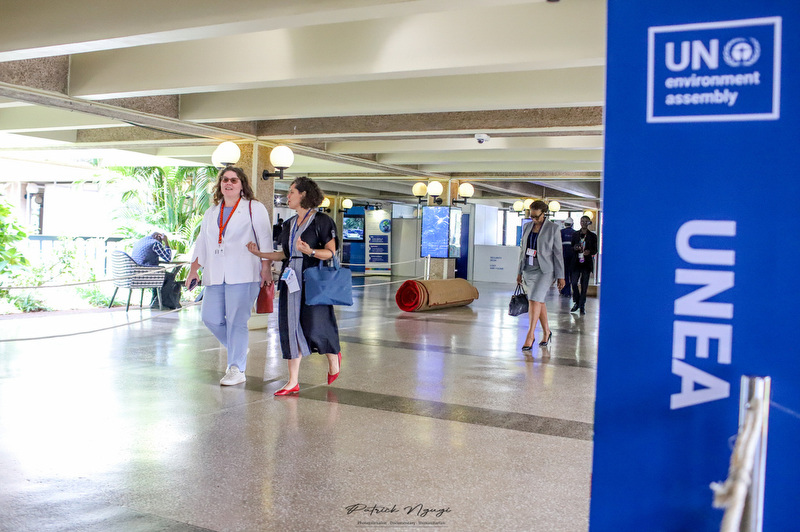
For the past two days, youth leaders, civil society groups, scientists, and government observers have packed into meeting rooms for the pre-UNEA consultations, a series of stakeholder sessions that traditionally shape the political tone of the main assembly. What unfolded on Day 2 was a reminder that environmental diplomacy is increasingly being driven not just by member states, but by a new generation unwilling to settle for vague promises or soft language.
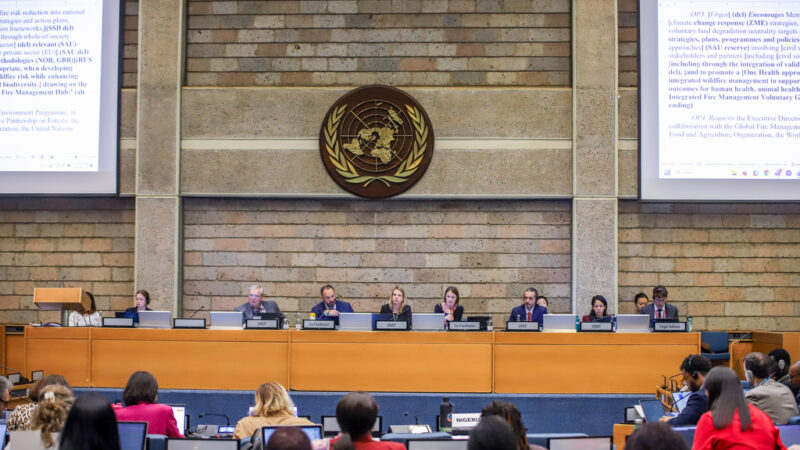
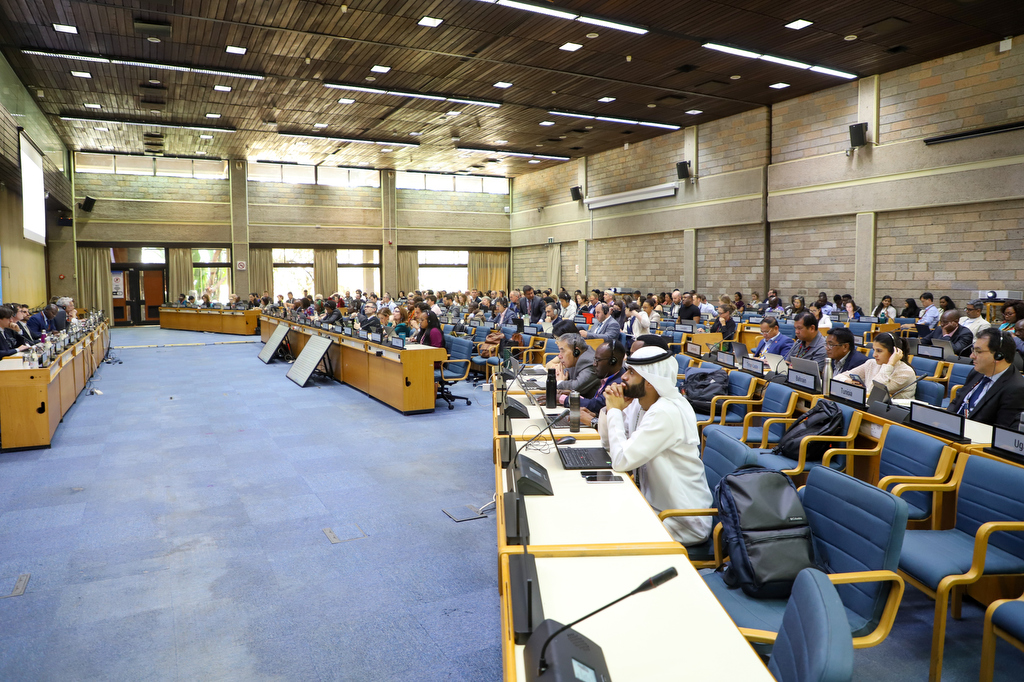
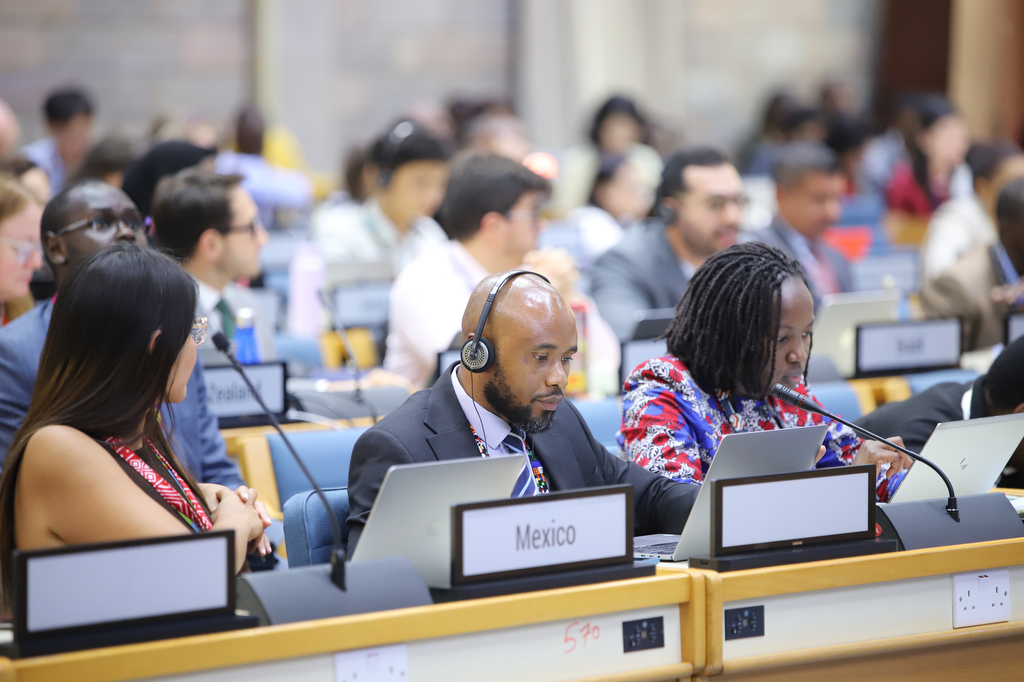
Member states of UNEP hold Policy discussions during OECPR-7 in UNEA-7 in Nairobi, Kenya. Photo: Patrick Ngugi
I was part of these discussions, witnessing the tension, the urgency, and, at times, the exhaustion that defined the day.
A Preview of the Battles to Come
This year’s UNEA—the world’s highest environmental policymaking forum—will examine issues ranging from microplastics to wildfires, AI’s environmental footprint to the escalating crisis of water insecurity. But it was the early negotiations around governance, mineral extraction and the circular economy that consumed much of Day 2.
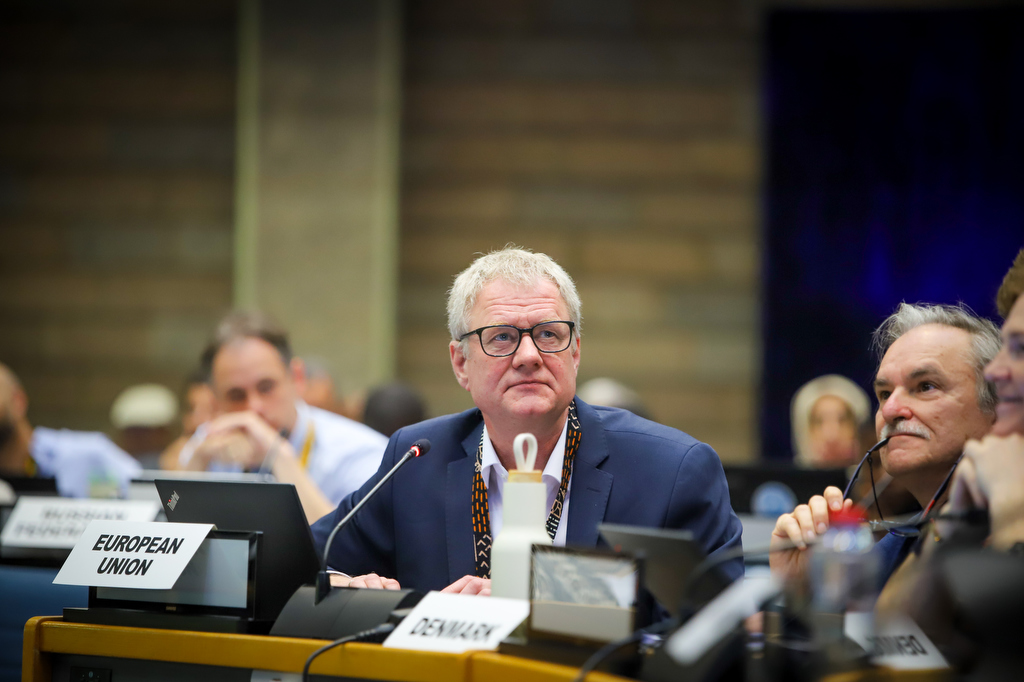
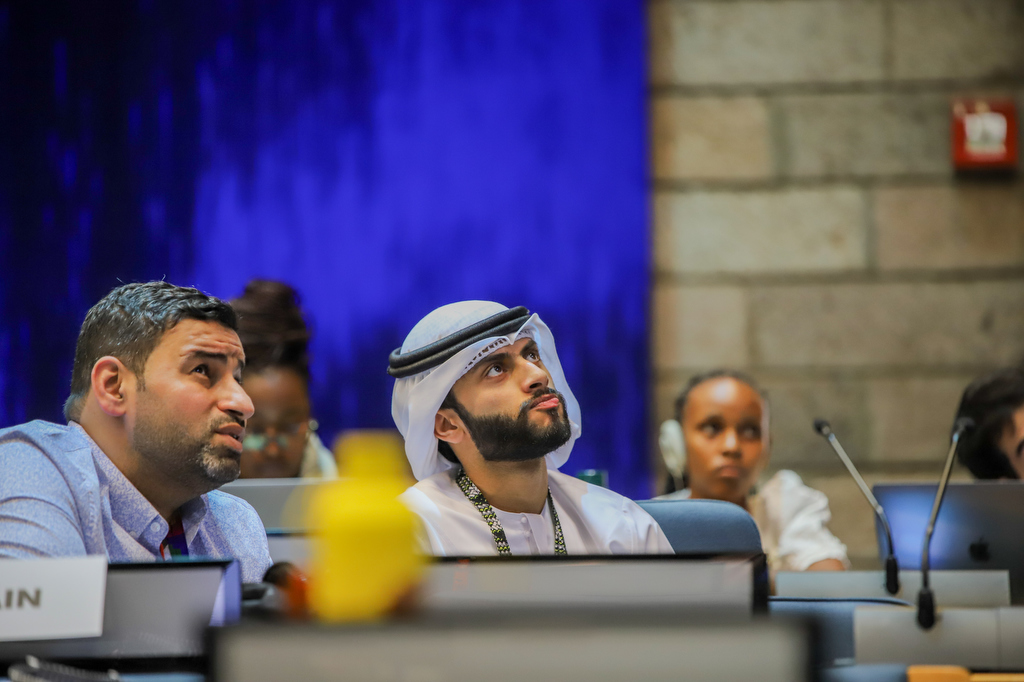
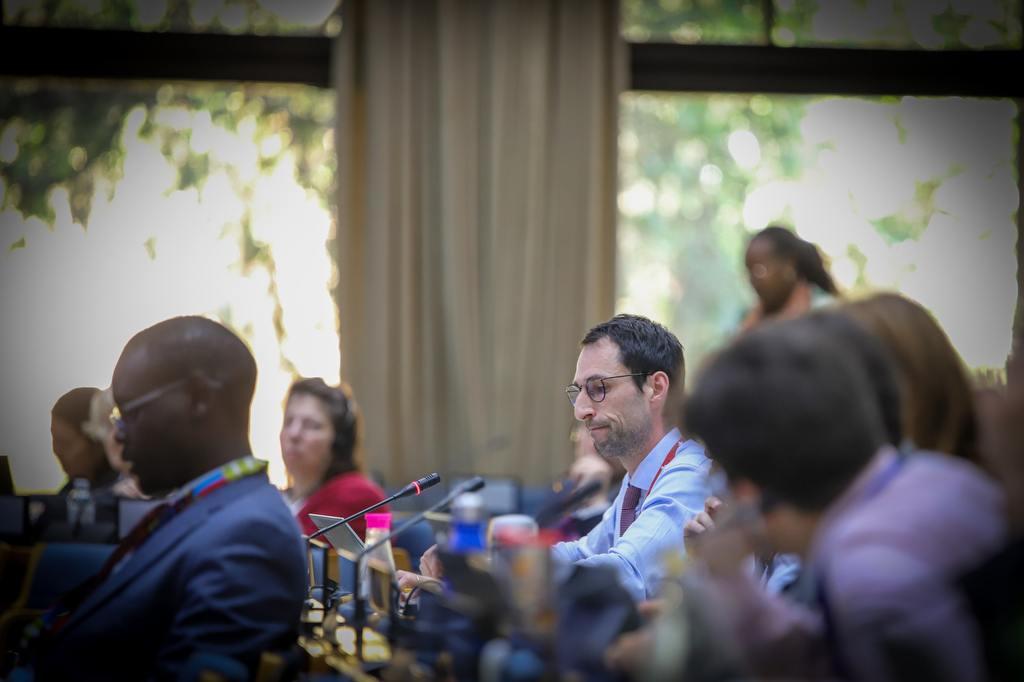
Mogens Krog, a delegate representing the EU, follows up draft amendments during OECPR-7 during UNEA-7 in Nairobi, Kenya
Across the sessions, a single theme emerged: young people want their voices not only heard but written—explicitly—into UNEA’s agenda.
A Heated Debate Over “Green Transition Minerals”
The most tense exchanges of the day centered on mineral resource stewardship. As governments rush to scale up renewable energy systems, demand for lithium, cobalt, copper, and rare earths continues to surge. The question is whether the world can pursue a green transition without repeating the extractive injustices of the past.
Youth delegates argued, NO!
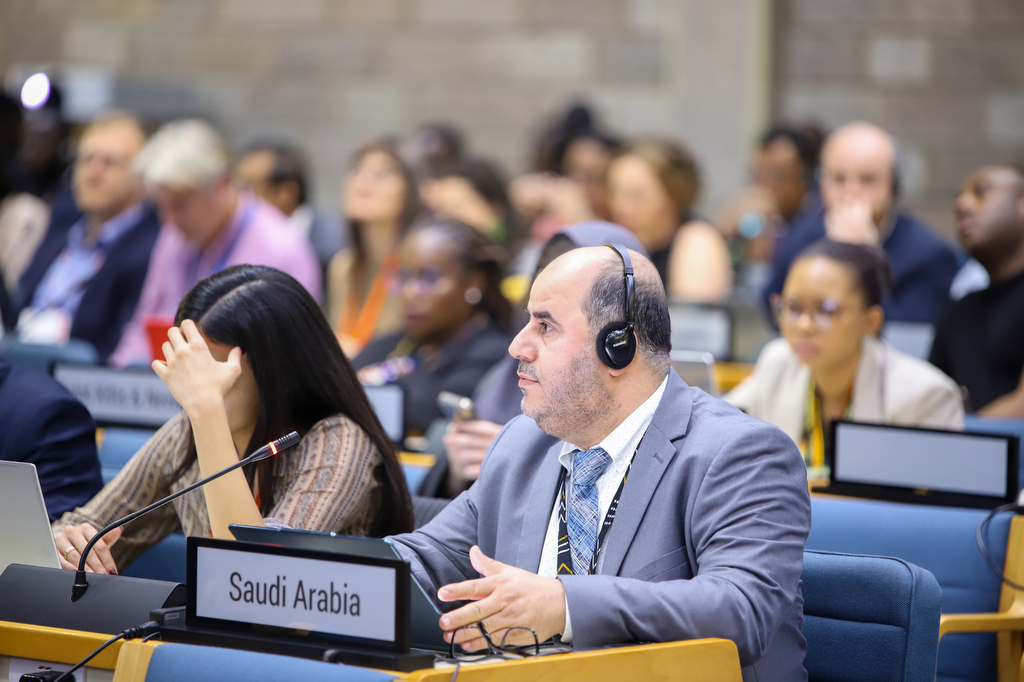
Qasem Alsharari of Saudi Arabia follows up on draft amendments on Governance and Law during UNEA-7
In a session I attended, amendments to the draft text were debated line by line. Youth and Children fought to have the same rights as member states. A suggestion that was fiercely debated. Fiecly contested. This saw major changes in the drafts that kept making it hard overall.
The room pushed back.
Several sessions ran into the evening as participants sacrificed their dinner breaks to reconcile opposing clauses. It was the clearest sign yet of how deeply this issue divides stakeholders—and how hard the youth bloc is prepared to fight.
Circular Economy and the Push for Stronger Producer Responsibility
Another major topic—waste management—sparked its own urgency.
Delegates pressed for a complete shift toward circular economic systems and stronger Extended Producer Responsibility (EPR) policies. The argument was straightforward: without systemic change, global waste costs could reach an estimated $640 billion by 2050.
Text negotiations often spilled into the hallways. During lunch breaks, I watched groups huddle over laptops, adjusting wording that could determine whether producers are merely encouraged or legally obliged to redesign systems that reduce waste.
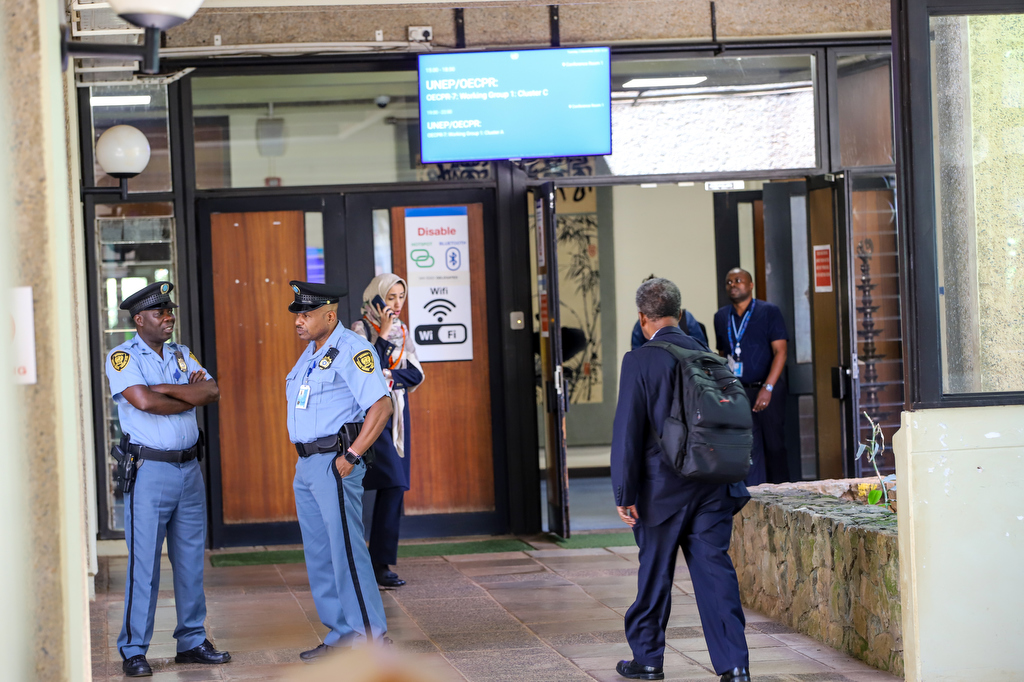
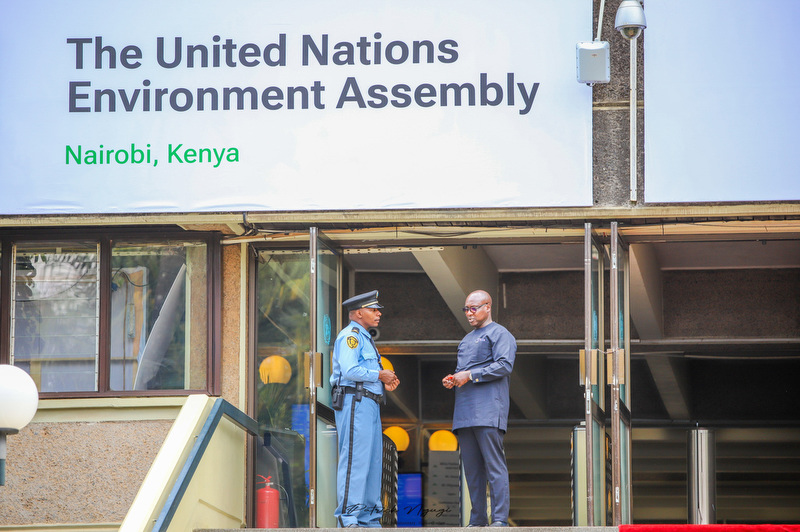
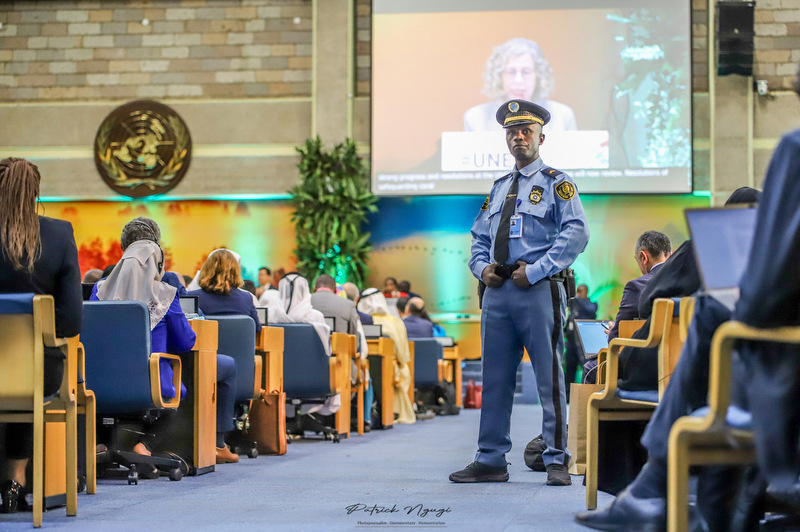
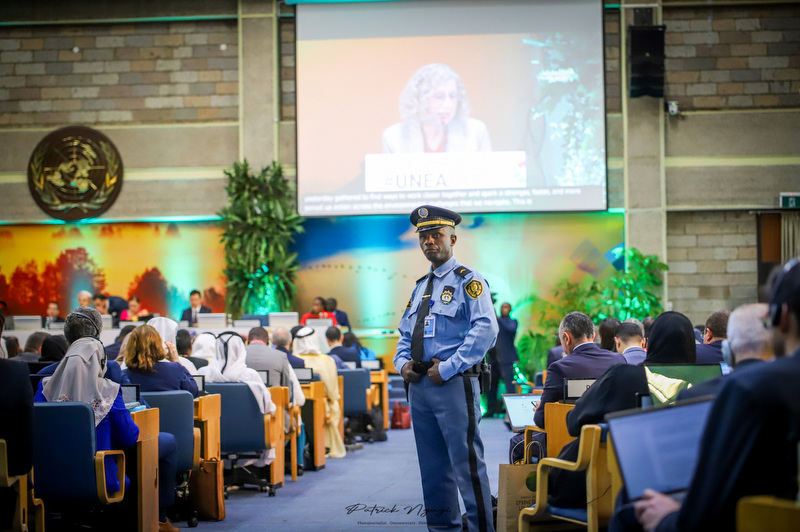
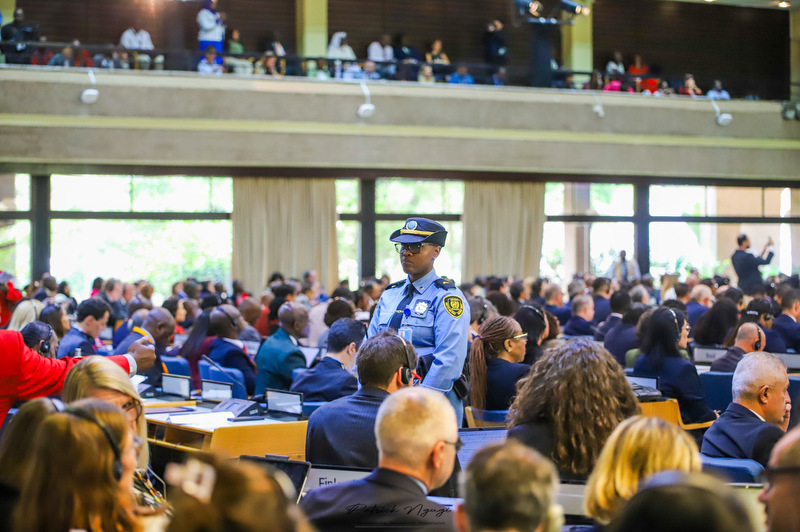
Security Officers Stand Guard during UNEA-7
The line between idealism and feasibility was thin, but the determination to keep circularity on the table was overwhelming.
Governance and Youth Rights: Beyond Symbolism
Perhaps the most emotionally charged theme was youth participation itself.
For years, young people have been invited to international environmental negotiations, but often in symbolic, non-binding roles. This time, they want more.
They pushed for;
formal recognition as stakeholders with agency,
mechanisms that ensure youth voices influence policy, and
accountability structures to prevent token inclusion.
Corridor conversations—which often reveal more than the official sessions—were dominated by this topic. Some delegates revisited it even after sessions closed, continuing discussions over coffee and on the walkways outside Conference Room 1.
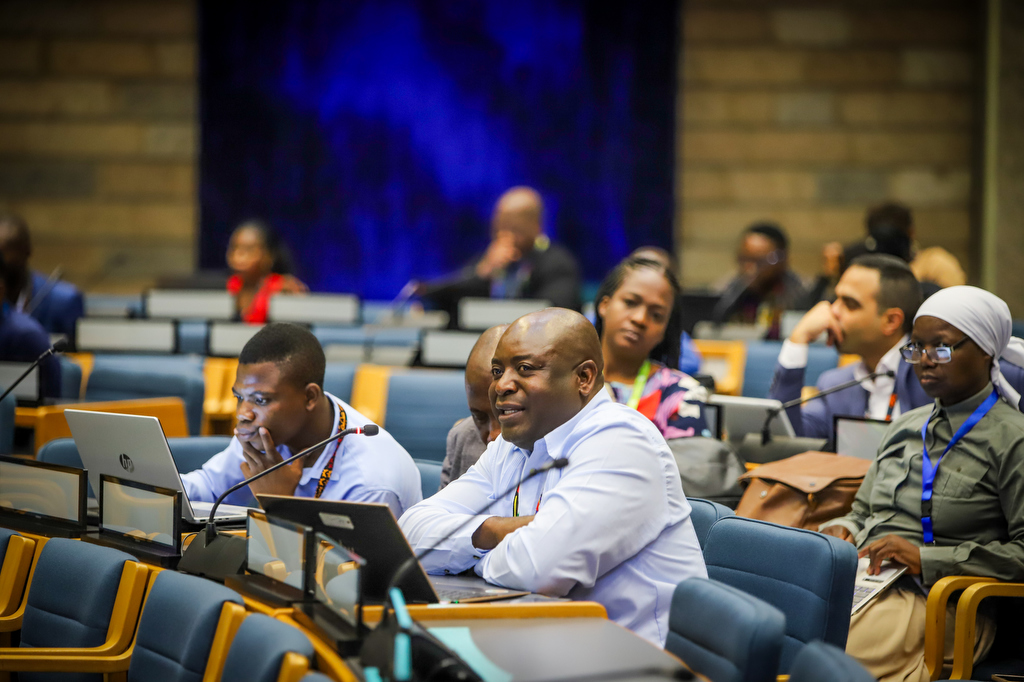
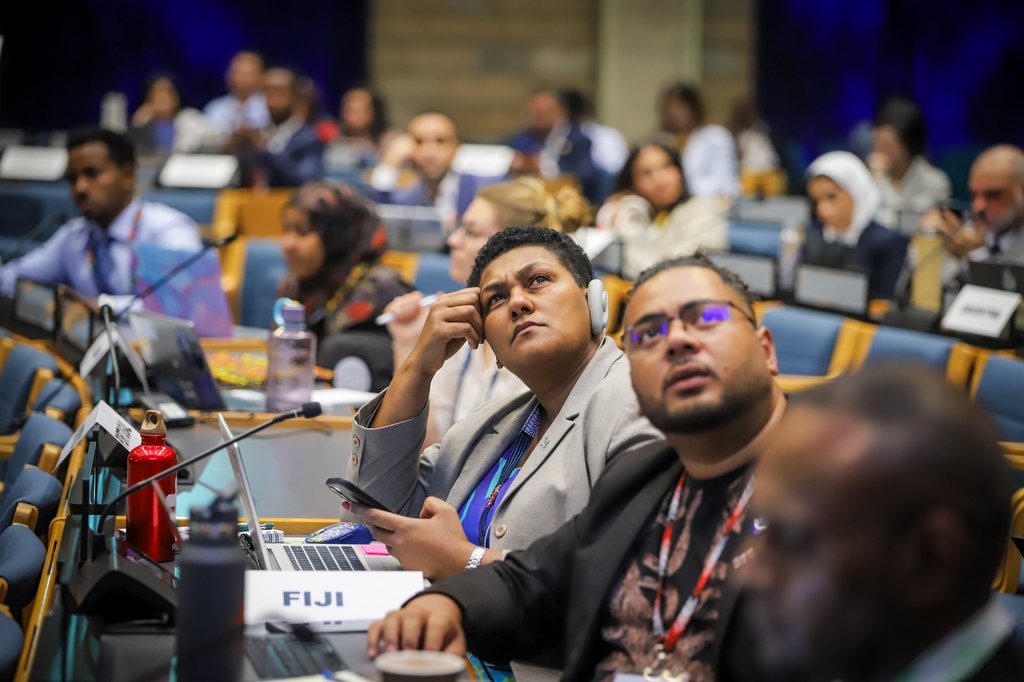
Delegates discuss draft amendments during UNEA-7, OECPR-7
The energy was unmistakable: youth leaders want UNEA-7 to be the moment their role becomes embedded in environmental governance—not an afterthought.
A Broader Question: What Does Prosperity Mean Now?
An unexpected but powerful thread woven through several sessions was the challenge to traditional economic metrics.
Participants urged policymakers to redefine prosperity to include:
cultural identity,
community well-being, and
ecological health.
The argument was not radical but timely. In an era of escalating climate extremes, many questioned whether GDP alone can meaningfully measure a nation’s success.
Drafting the Documents That Will Shape UNEA-7
By the end of Day 2, the drafting committees—exhausted, hungry, and still debating—had made measurable progress.
Their efforts are feeding directly into two major documents:
The Global Youth Statement, and
The Global Youth Declaration
Both will be presented to government delegations during UNEA-7 and will influence how negotiations unfold when ministers arrive next week.
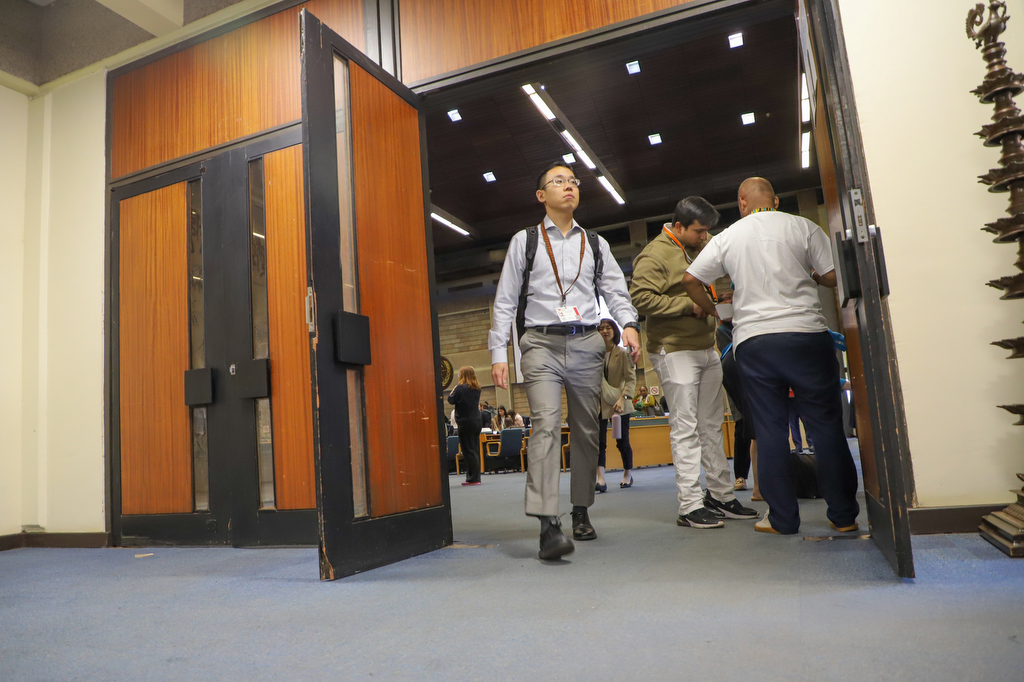
A delegate walks Out of the hall after a drafting session during UNEA-7
The level of commitment was impossible to ignore: delegates skipped meals, revisited stubborn clauses in the corridors, traded ideas during lunch, and returned to the negotiating table late into the evening.
This was not symbolic participation. It was policymaking at its most human—messy, determined, and deeply felt.
The Road to UNEA-7
If these pre-UNEA sessions are any indication, the formal negotiations beginning December 8 will be contentious, emotionally charged, and unusually youth-driven.
And perhaps that is precisely the point.
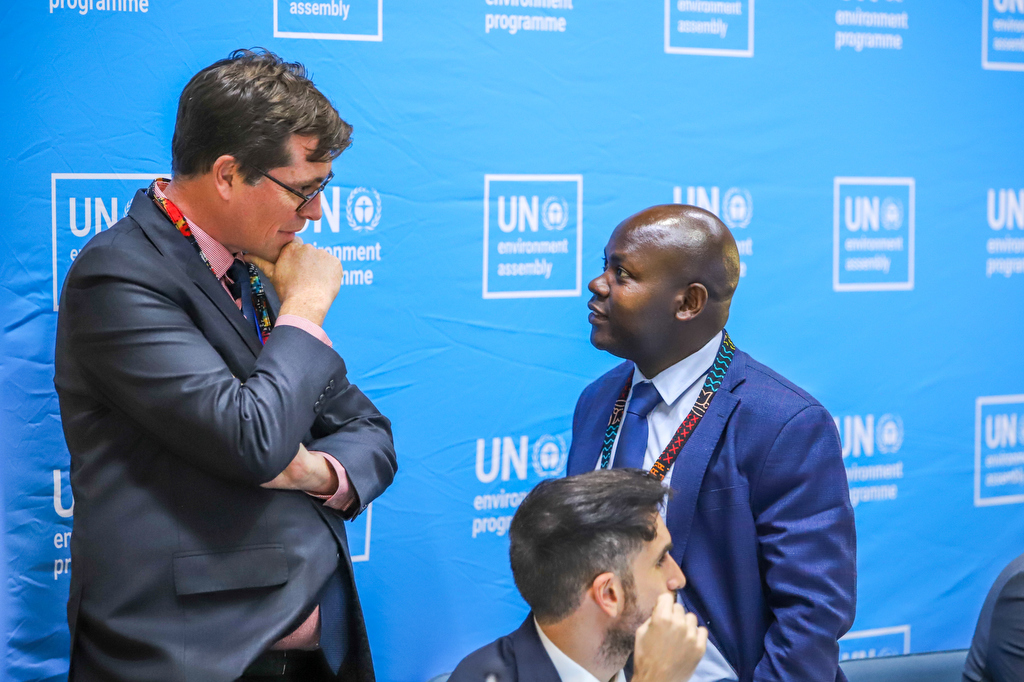
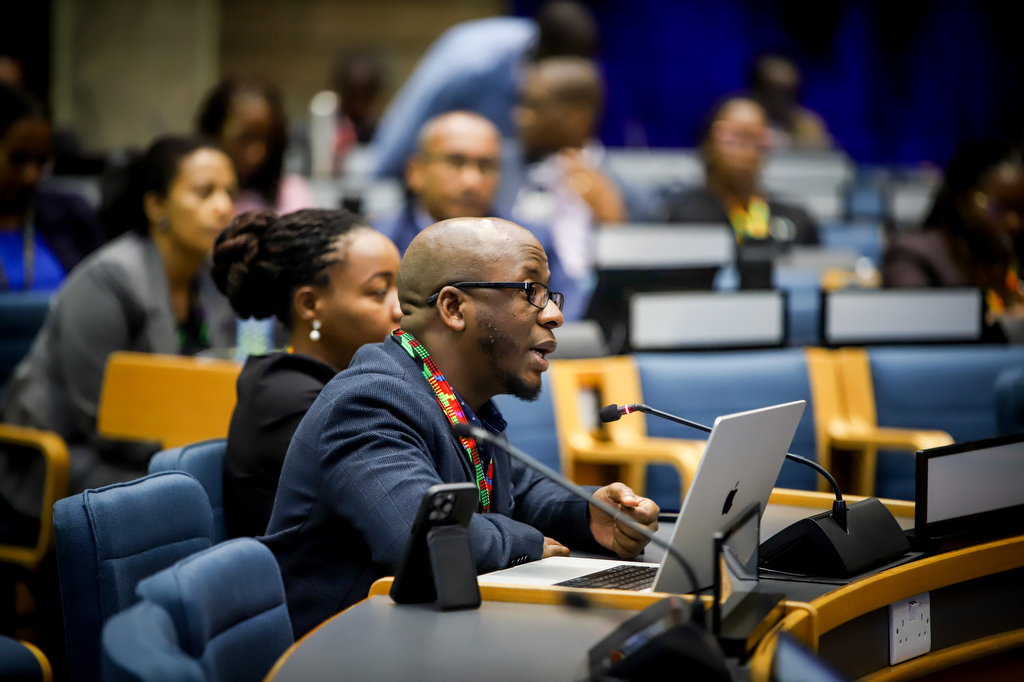
Tobias Ogweno of Kenya interacts with a delegate ahead of of Cluster D Policy draft discussions during UNEA-7
In a world facing overlapping environmental crises, the people who will live longest with the consequences are no longer willing to wait quietly outside the room. At UNEA-7, they are not only demanding a seat at the table—they are actively rewriting the agenda. And I will be there to witness it all!
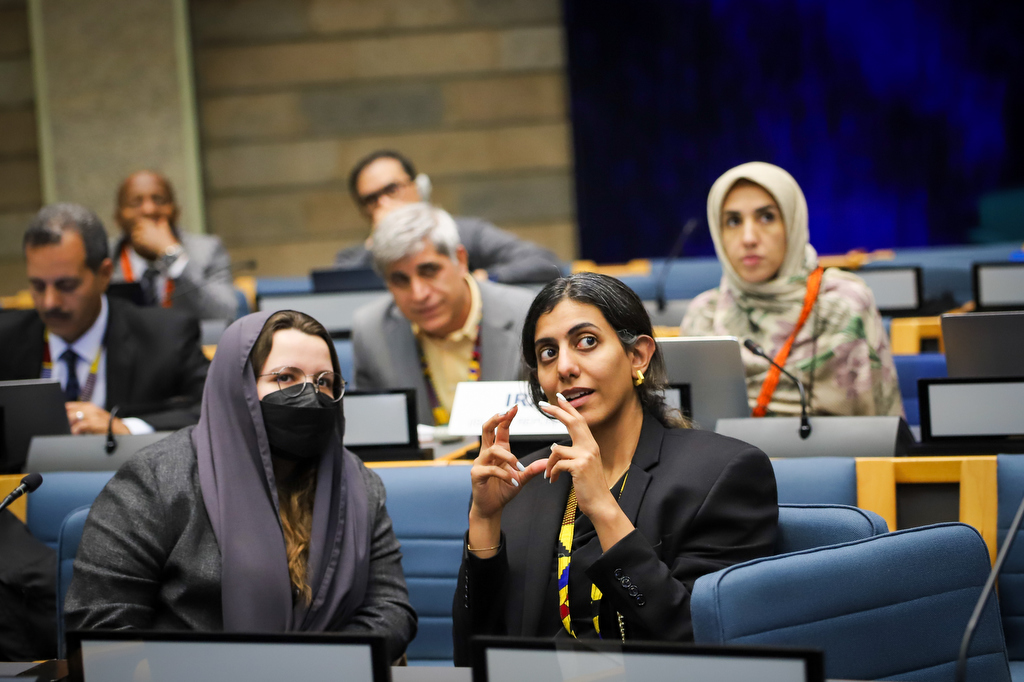
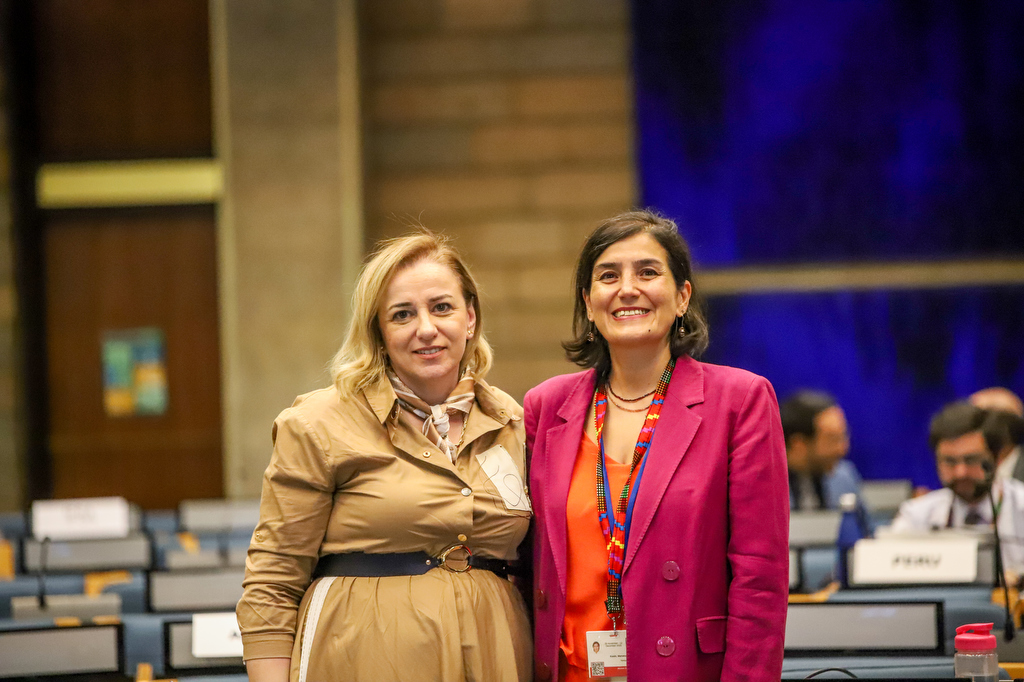
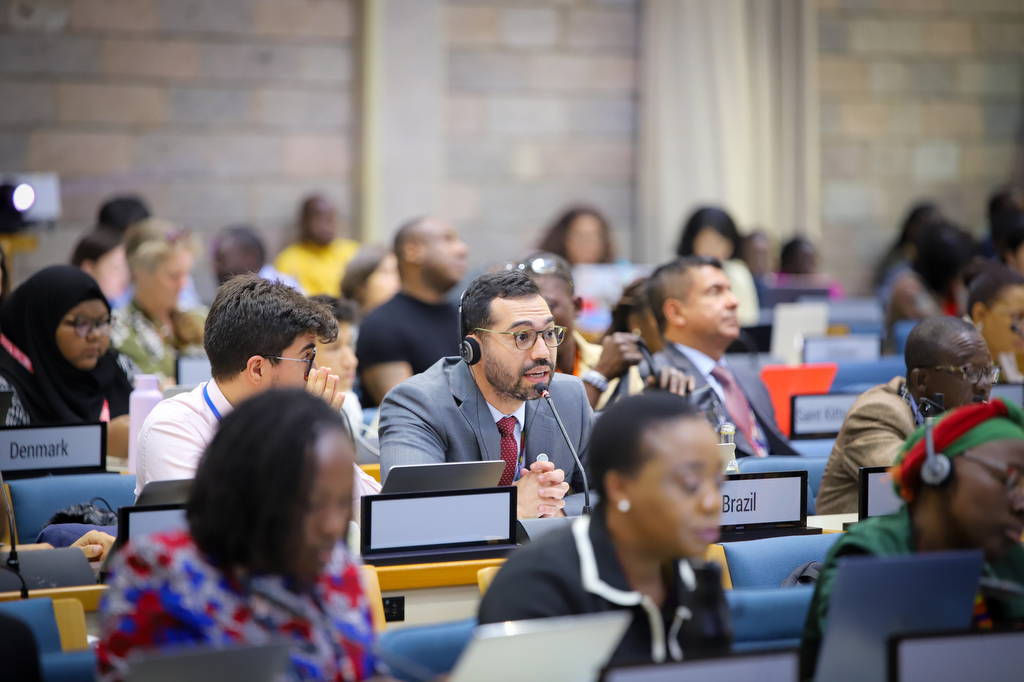
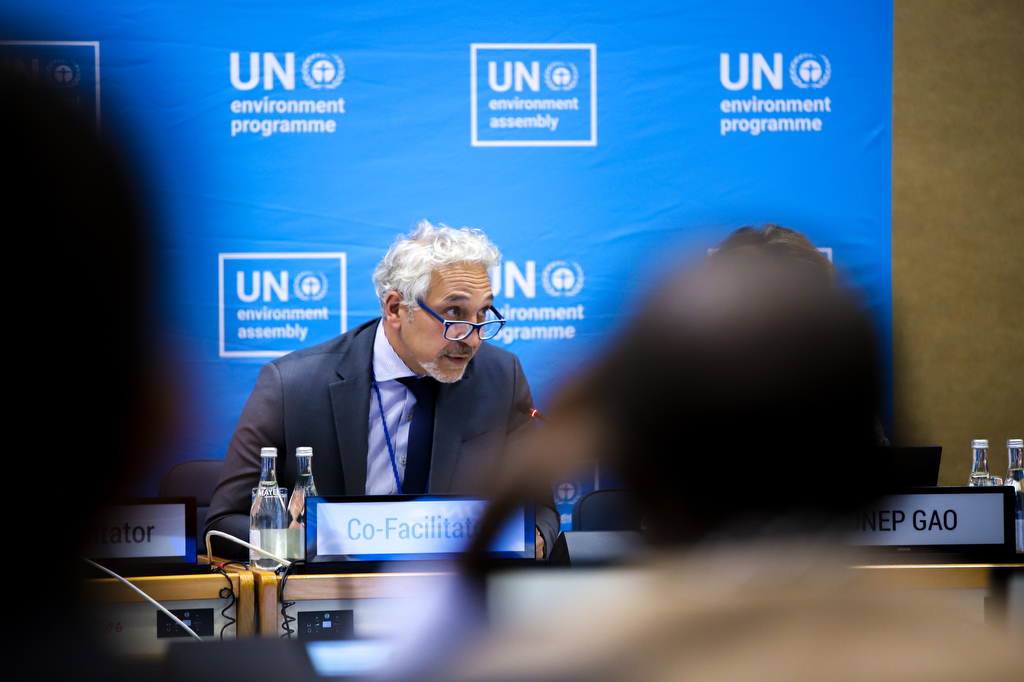
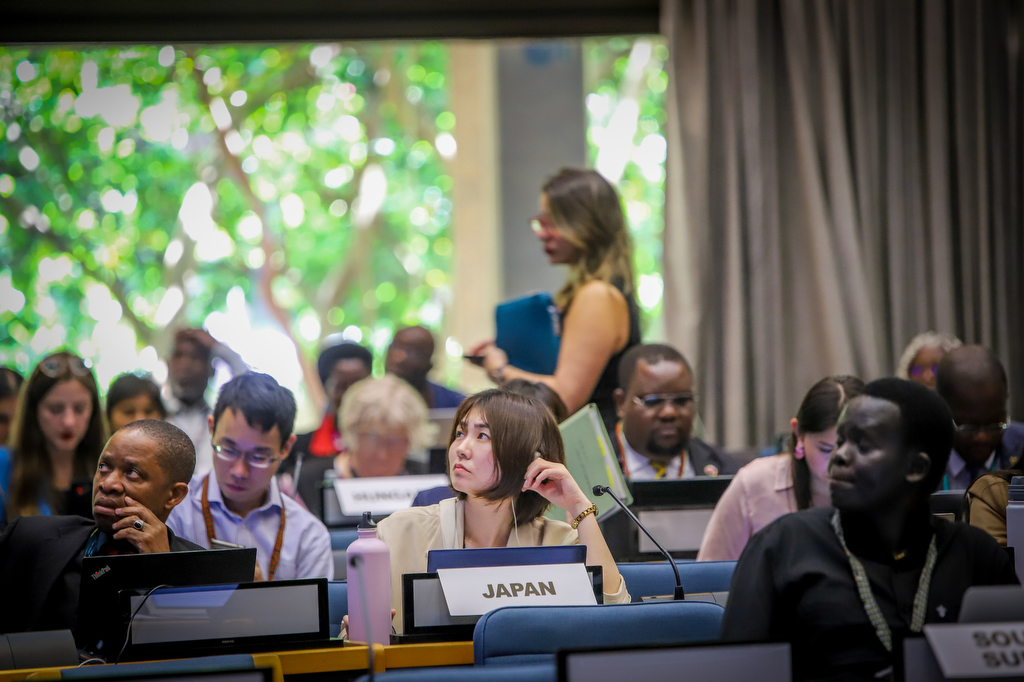
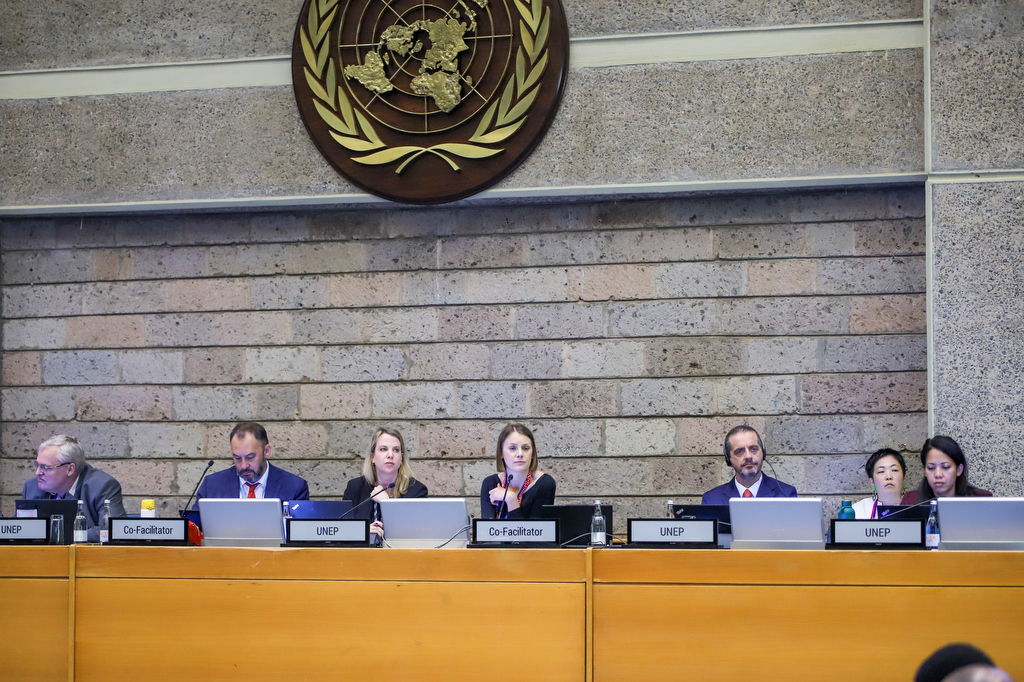
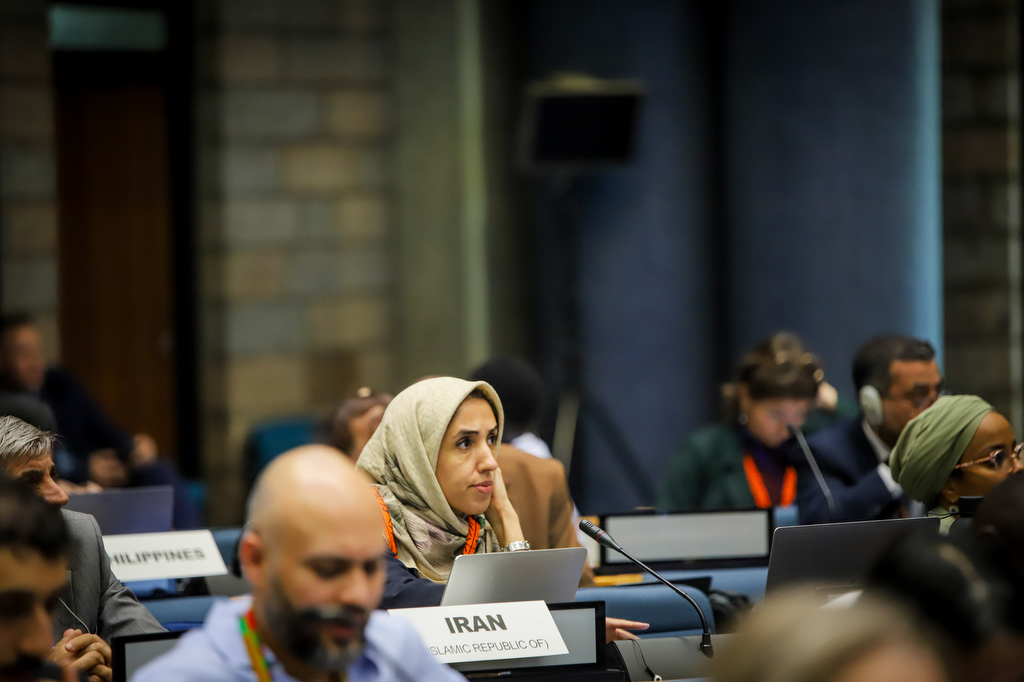
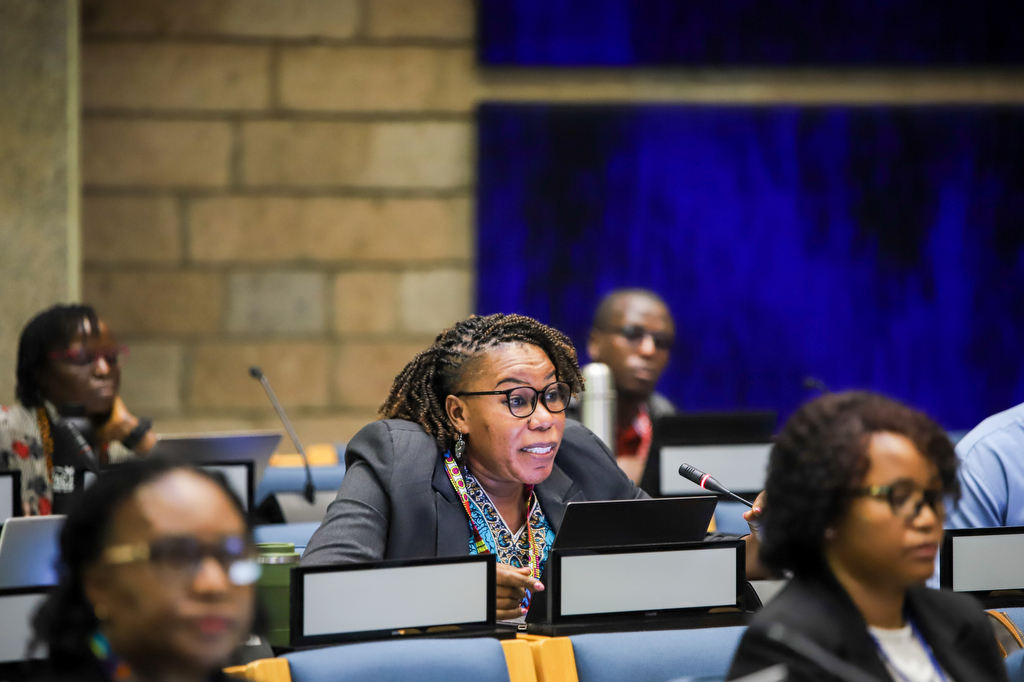
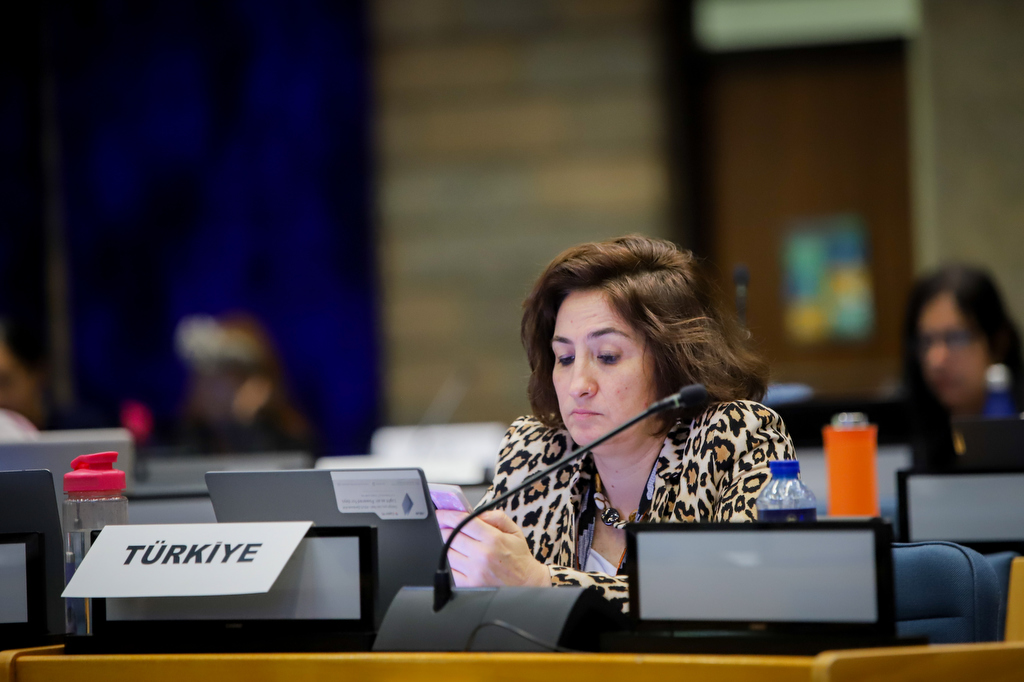
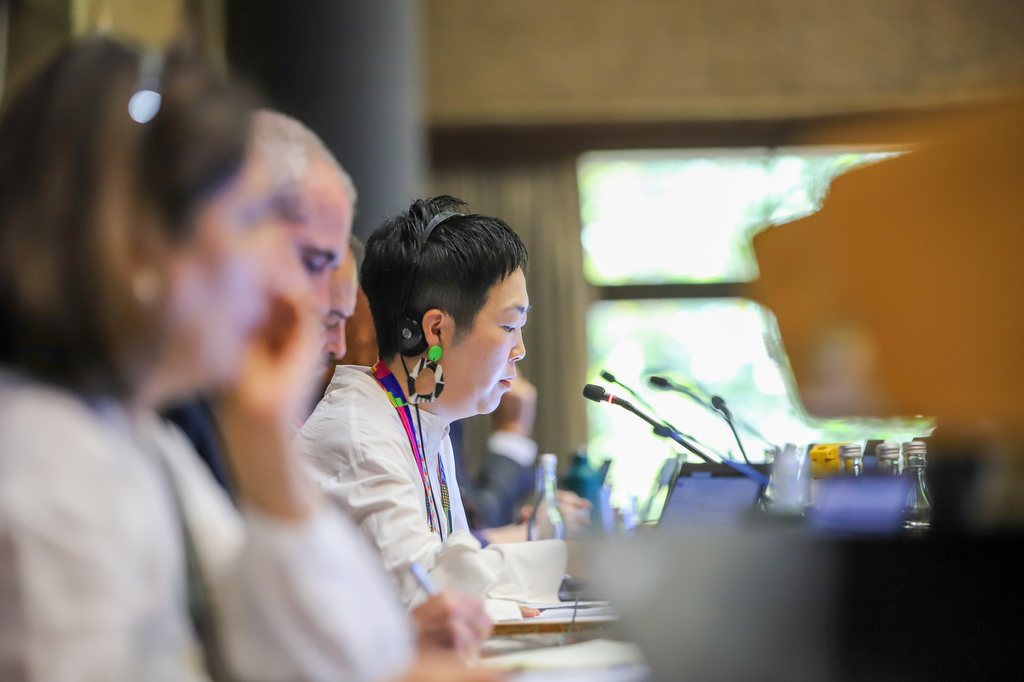
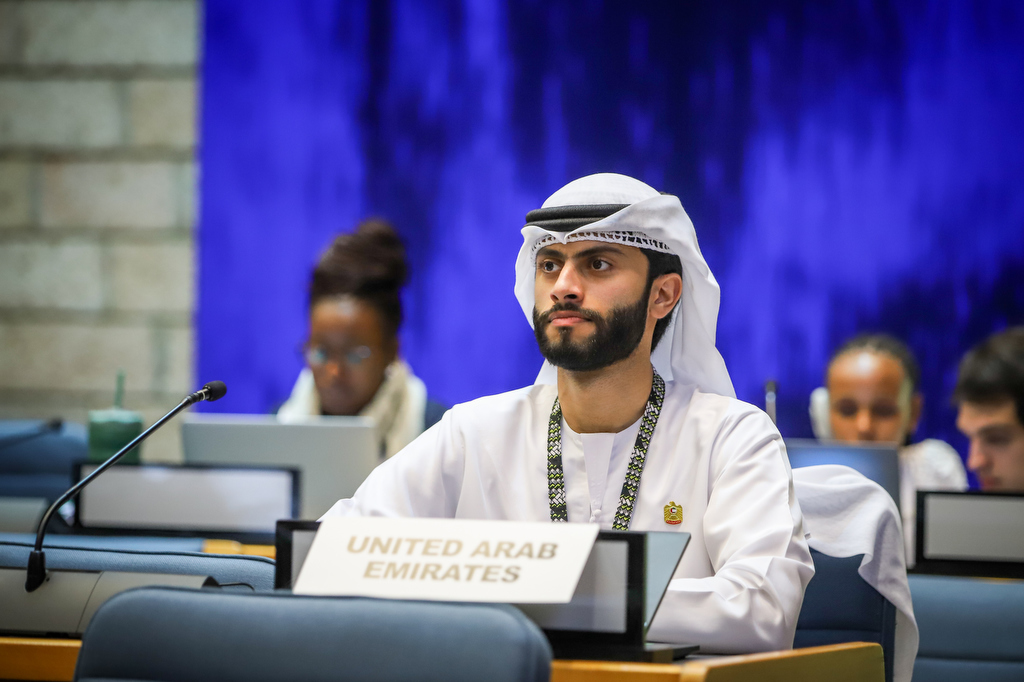
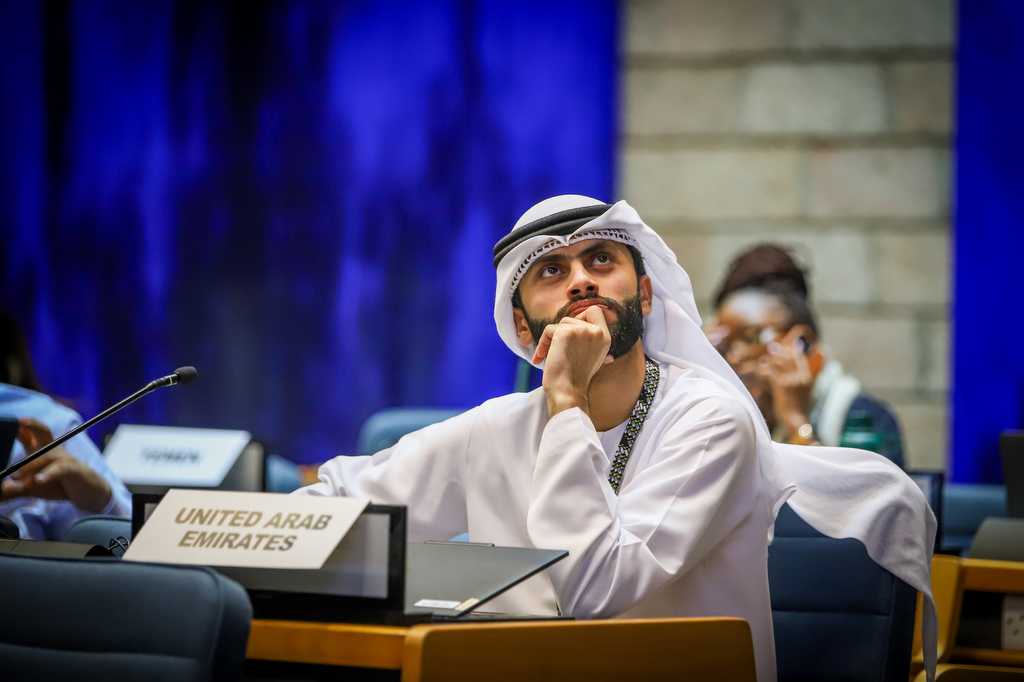
Delegates from Turkiye Pose for a Photo during UNEA-7 Draft discussions.Rodney Almeida e Silva, a delegate from Brazil, participates in Policy Drafting during the UNEA-7 at UNEP Nairobi, KenyaNader Al-Tarawneh of Jordan leads the OECPR-7 Session to discuss Strategic, budget, and governing issues at UNEA-7 in Nairobi, KenyaA Delegate from Japan follows through on suggested amendments on Nature and Climate during UNEA-7 in Nairobi, Kenya.Cluster A Facilitators, Lead a draft amendment discussion on Nature and Climate during the UNEA-7, OECPR-7 in Nairobi, Kenya.Sheida Asgharzadeh Ghahroudi, a delegate representing Islamic Republic of Iran, participates in the UNEA-7 Policy Drafting in Nairobi, KenyaMayando Kanyatta of Zambia Participates in Cluster A of OECPR(Open-ended Committee of Permanent Representatives) Policy Drafting ahead of UNEA-7 in Nairobi, KenyaAlara Istemil Aydil of Turkiye during OECPR-7 Ahead of UNEA-7 in Nairobi KenyaKanako Okano of Japan Leads Cluster A Policy drafting during OECPR-7 ahead of UNEA-7 in Nairobi, KenyaEmmanuel Kenga of Kenya in UNEA 7
Barirega Akankwasah of Uganda Participates in OECPR Policy Drafting ahead of UNEA-7 in Nairobi, Kenya
Kenya’s EV Boom Puts the Country at the Center of UNEA-7
An African Experiment in Climate Solutions Goes Global
Nairobi — On a cool December morning in 2025, an electric boda-boda slips past the tree-lined perimeter of the United Nations complex in Gigiri. Delegates arriving for the seventh United Nations Environment Assembly pause briefly—not because the motorcycle is unusual, but because it is now a familiar part of Nairobi’s soundscape. Its quiet hum stands in stark contrast to the diesel engines that long defined the city’s transport rhythm.
In a way, the scene encapsulates a larger, more ambitious story: Kenya’s embrace of electric mobility has moved from fringe experiment to national project, unfolding at a pace that has surprised even policy analysts who track the sector.
The numbers tell part of that story. Electricity consumption for EV charging grew more than 300 percent in a single year, reaching 5.04 GWh by mid-2025, according to Kenya Power. Registered electric vehicles—once fewer than 500 in 2022—now exceed 9,000, with the government aiming for EVs to make up 5 percent of all new vehicle registrations by the end of 2025.
These figures place Kenya among Africa’s fastest-growing EV markets on a per-capita basis—though experts note Rwanda still outpaces Kenya in regulatory clarity and incentives.
As UNEA-7 convenes under the theme “Advancing sustainable solutions for a resilient planet,” Kenya arrives not simply as host, but as a case study. A living laboratory. A reminder that climate solutions are not theoretical; they exist on the streets outside the UN gates.
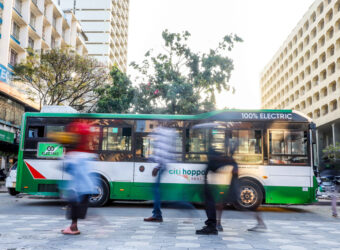
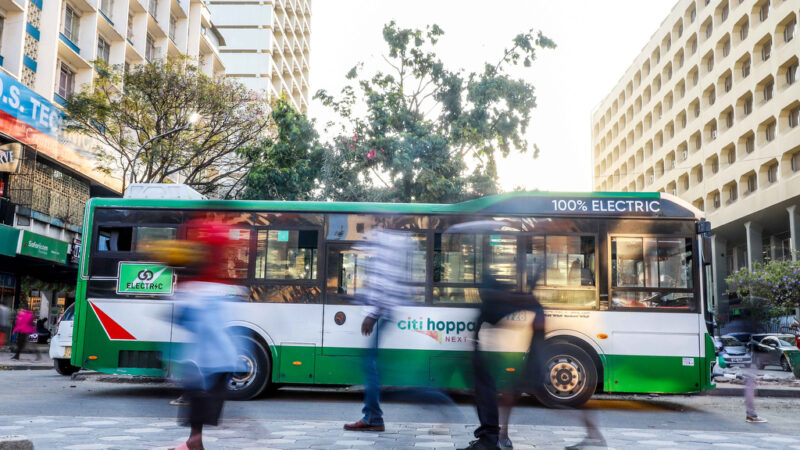
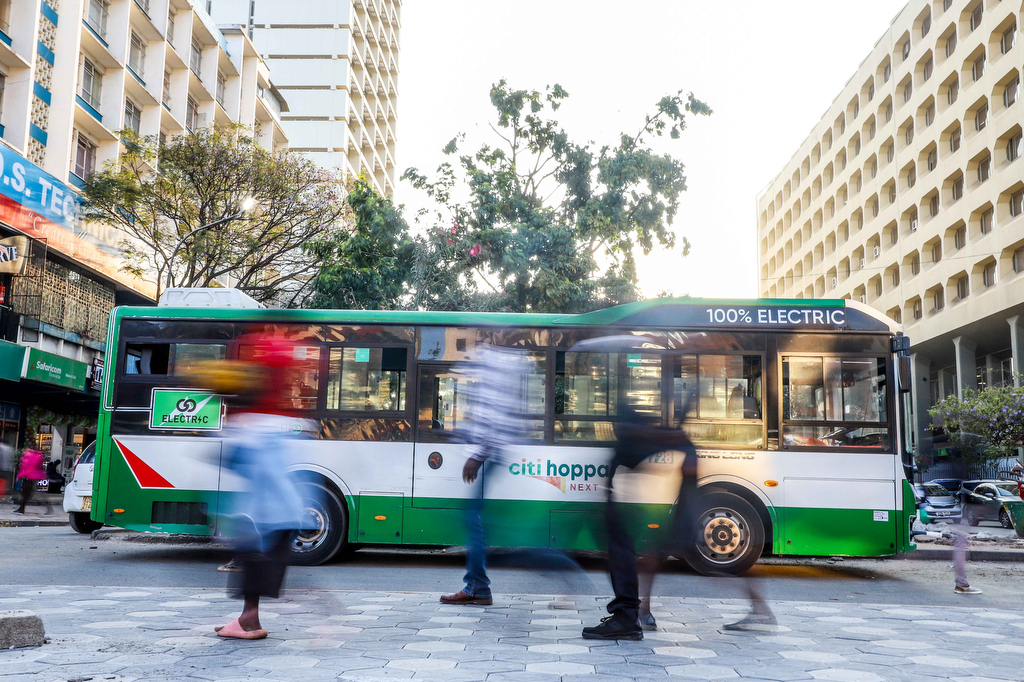
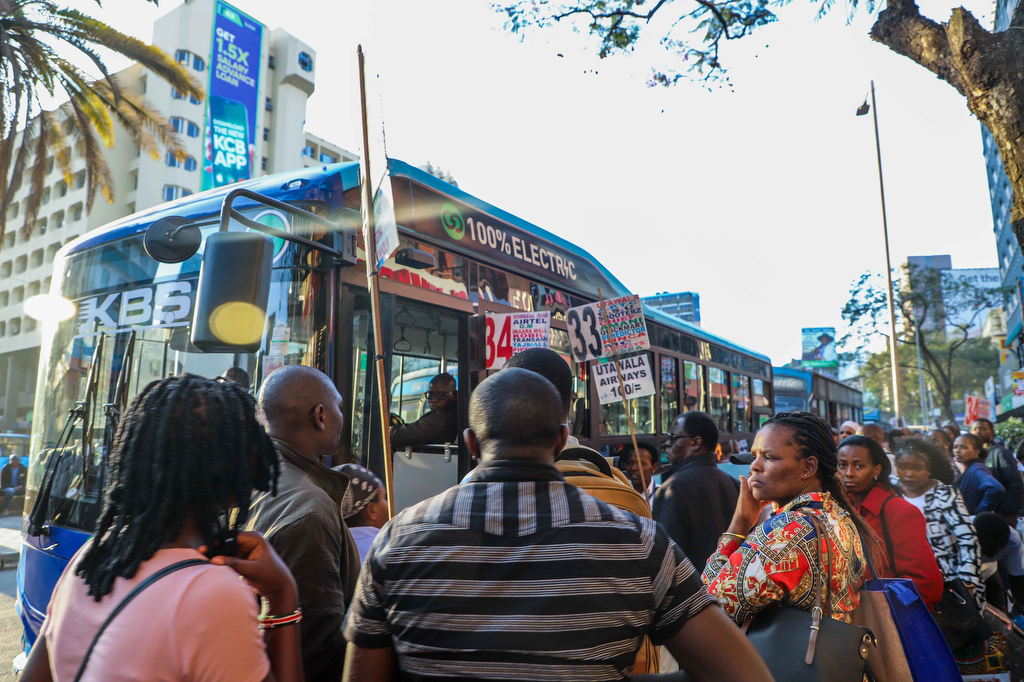
An Electric Bus Awaits Boarding passengers in Moi Avenue, Nairobi. Photo Patrick Ngugi
UNEA-7 arrives at a strategic moment in global environmental diplomacy. It follows the Pact for the Future and precedes COP-30 in Belém, two milestones pushing governments toward stronger climate alignment.
Diplomats expect three outcomes with direct implications for mobility:
Global guidelines for sustainable urban transport,
Reinforced commitments to phase out fossil-fuel subsidies, and
A Medium-Term Strategy (2026–2029) that shifts focus from promises to execution, particularly in developing nations.
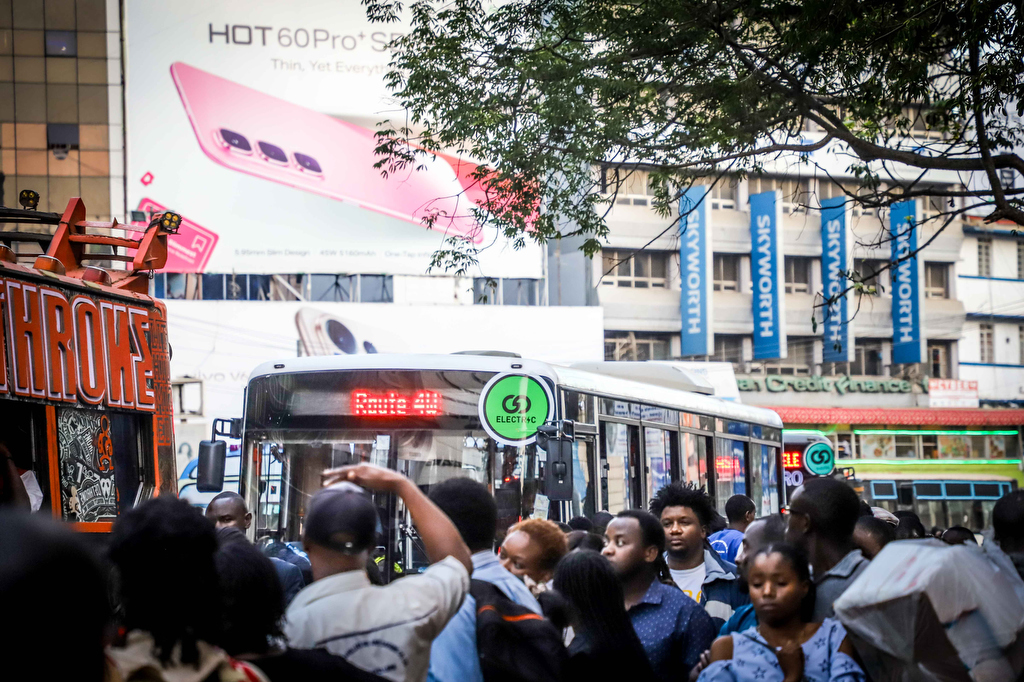
For delegates, Kenya’s streets—cluttered with the familiar green Roam motorcycles and the growing presence of BasiGo buses—offer a rare opportunity to see how policy translates into everyday mobility.
An Unlikely EV Surge: 2022–2025
Kenya’s electric transition has been uneven, but undeniably fast.
EVs Registered:
2022: <500
2023: ~1,200
2024: ~4,500
Mid-2025: >9,000
Transport experts caution that Kenya’s trajectory is still fragile and dependent on policy continuity. Yet the sector’s composition suggests broad uptake beyond wealthy urban drivers:
60%: Electric motorbikes and tuk-tuks
25%: Passenger cars and SUVs
15%: Buses and minibuses—the fastest-growing segment
The bus category reveals perhaps the clearest shift in public transport economics. Operators say electric buses slash fuel and maintenance costs, crucial in a city where margins are tight.
Milestones Reshaping Nairobi’s Mobility
1. BasiGo
By December 2025, BasiGo is expected to deploy more than 100 electric buses, operating through a lease-to-own model that shields SACCOs from high upfront costs—one of the largest barriers in the sector.
2. Roam
In early 2025, Roam completed a 1,600-kilometre EV ride from Mombasa to Kampala, demonstrating the region’s growing charging corridor. Its assembly plant in Nairobi is among the largest EV manufacturers in East Africa.
3. Matatu SACCO Adoption
Operators like Super Metro, Latema, and Citi Hoppa have begun integrating electric buses. Some regional routes—including those connecting to Nyeri and Nyahururu—now feature pilot charging stations.
Transport workers, however, highlight ongoing challenges. “The buses make sense, but the price doesn’t,” said Samson Ndung’u, a driver with Latema SACCO. “Most operators can only afford them through leasing.”
This kind of tension—between technological optimism and economic reality—defines Kenya’s current phase of electrification.
The Policy Architecture Behind the Shift
Kenya’s EV boom did not materialize on goodwill alone. It is the product of targeted fiscal and energy policies.
Fiscal Incentives
Finance Acts of 2023 and 2024 introduced:
Excise duty cuts (20% → 10%)
VAT exemptions on EVs and charging equipment
Zero-rated import duty on battery packs
These changes helped reduce costs, though market prices remain high due to global supply limits and local dealership margins.
Energy-Sector Support
Kenya Power’s off-peak EV tariff (KES 12/kWh) lowered charging costs for businesses. Solar-EV integration is growing, particularly in industrial zones and peri-urban estates.
Yet energy analysts warn of contradictions. President Ruto recently acknowledged that Kenya may need power rationing due to supply-demand imbalances—a disclosure that sparked debate about whether the grid can support widespread electrification without major upgrades.
A Public Service Ev Bus traverses through Moi Avenue in Nairobi, Kenya. Photo Patrick Ngugi
E-Mobility Policy (2024 Draft)
Expected to be adopted in 2025, the policy targets:
5% EV share of new registrations in 2025
30% by 2030
Incentives for local assembly and battery innovation
If approved, the framework would become one of the region’s most detailed EV policy documents.
Where Kenya’s Experience Meets UNEA-7 Priorities
Kenya’s story resonates with several themes shaping UNEA-7.
A. Integrated, Low-Carbon Systems
With a grid already over 90% renewable, Kenya’s EVs carry some of the lowest lifecycle emissions globally—an outcome many wealthier countries have yet to achieve.
B. Equity and Accessibility
Electric mobility here is less about private cars and more about:
Affordable boda operations
Lower matatu fares
New jobs in assembly, maintenance, and software
Youth-led startups in battery recycling
C. Financing Innovation
Kenya offers workable models for developing countries:
Pay-as-you-go purchases
Battery-swapping
Leased EV buses
Blended finance from AfDB, EIB, and the Green Climate Fund
D. Public Health Gains
Air-quality data from pilot corridors shows early improvements in PM2.5 concentrations, though independent verification is underway.
What UNEA-7 Will Showcase
Kenya plans to use this year’s Assembly as a national exhibition.
Expected features include:
Electric shuttles for delegates
An “EV Safari” demonstration on UN grounds
Youth-led innovation tents
Public transport pilot routes near Gigiri
Officials say the aim is to present electric mobility not as an aspiration, but as an active system that can be scaled across the Global South.
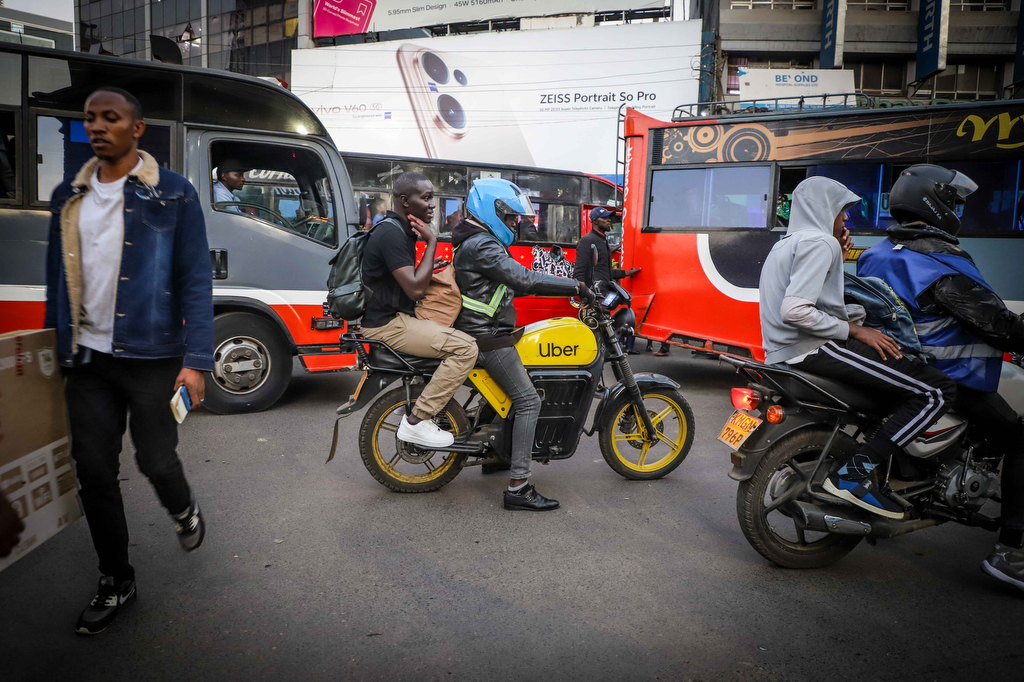
An Electric Boda(motorcycle) carries a Passenger through the Streets of Nairobi, Kenya.
Lessons Emerging for the Developing World
Several conclusions are already evident:
Electrification is possible without a high national income. Kenya’s GDP per capita—about $2,100—has not prevented rapid EV growth.
Two- and three-wheelers remain the most efficient entry point.
Policy clarity and private-sector freedom are more important than perfect infrastructure.
Regional alignment—especially within the East African Community—reduces costs and strengthens supply chains.
The Friction Points Ahead
Experts caution against over-romanticizing Kenya’s progress.
Grid bottlenecks persist, especially outside urban centers
Financing gaps remain a barrier for public transport electrification
Second-life battery planning is still in its infancy
Without long-term planning, Kenya risks creating pockets of progress rather than a nationwide transition.
Passengers Await to Board an Electric Boda in Moi Avenue Nairobi, kenya
From Nairobi to the World
Kenya’s electric mobility revolution is reshaping perceptions of what climate action can look like in lower-middle-income nations. The country offers a rare combination of policy ambition, private-sector improvisation, and citizen-level adoption.
As UNEA-7 delegates gather in Nairobi, the city’s roads will serve as a backdrop to global deliberations—and a reminder that the transition to cleaner mobility does not lie in the distant future. It is already unfolding, quietly, on the streets.
A Call to Action
Delegates are expected to debate two proposals that echo Kenya’s own trajectory:
A global EV adoption framework with realistic timelines
A UNEP-led E-Mobility Acceleration Facility tailored to the Global South
UNEA-7 Explained: What It Is and Why the 2025 Session in Nairobi Matters
What Is UNEA-7 and Why Does It Matter for Our Planet
The United Nations Environment Assembly (UNEA) is the world’s highest-level decision-making body on the environment. It was established in 2012 under the United Nations Environment Programme (UNEP). All 193 UN Member States take part.
UNEA meets every two years. Governments, ministers, NGOs, scientists, youth, and businesses come together to set the global environmental agenda. They negotiate resolutions. They review emerging threats. They push for international collaboration.
What Is UNEA-7?
UNEA-7 is the seventh session of the assembly.
It will take place from December 8 to 12, 2025, at the UNEP headquarters in Nairobi, Kenya, inside the UN Office in Nairobi (UNON).
Before it begins, diplomats will meet for OECPR-7 from December 1 to 5, 2025. This meeting prepares the agenda and negotiates draft resolutions.
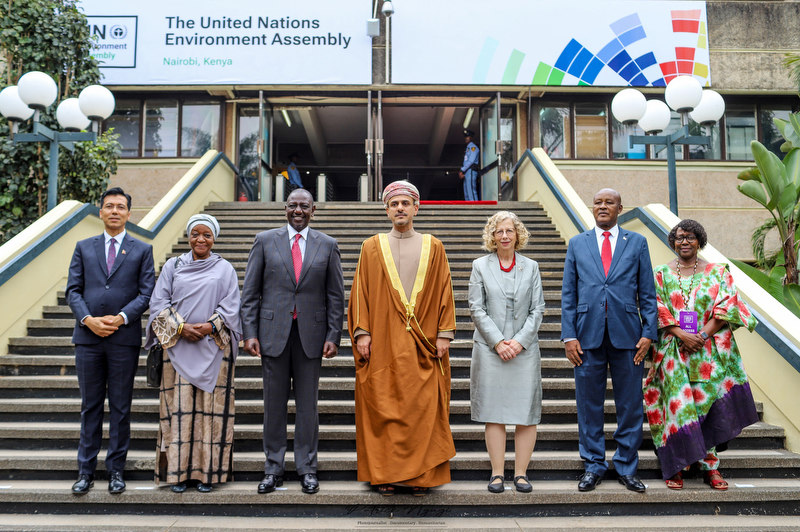
UNEA-7 will be presided over by H.E. Abdullah Bin Ali Al-Amri, President of Oman’s Environment Authority.
This year’s theme is “Advancing sustainable solutions for a resilient planet.”
The focus is on practical, forward-looking actions to fix environmental damage and strengthen global resilience.
Why UNEA-7 Matters
1. It Shapes Global Environmental Policy
UNEA-7 will influence how the world responds to climate change, pollution, biodiversity loss, and resource use. It’s in most cases where major environmental decisions that shape the environment are made.
Resolutions adopted here often guide national laws and major UN summits. Everyone is always on their toes watching the resolutions.
Past UNEA sessions have sparked major global actions.
For example, UNEA-5.2 launched negotiations for a global treaty to end plastic pollution. UNEA-7 is expected to push this momentum further.
2. It Addresses New and Rising Threats
UNEA-7 will discuss issues affecting people everywhere, including:
My work focuses on documenting the stories behind the negotiations, the people fighting for environmental justice, and the real impacts of climate change, especially in Kenya.
As a photographer, UNEA-7 gives me the chance to:
* Capture powerful moments from global decision-makers
* Document youth and civil-society movements
* Follow Kenya’s environmental leadership
* Highlight issues like microplastics, pollution, and climate impacts
* Create visual stories that bring global policy closer to the public
My lens allows me to translate complex negotiations into human stories.
This event is not only political. It is deeply human. And I aim to show that through my work.
It attracts global attention, investment, and partnerships.
It highlights Kenya’s progress and challenges in climate adaptation, renewable energy, conservation, waste management, and pollution control.
Nairobi becomes the center of global environmental diplomacy
UNEA-7 is more than a conference.
It is a moment for the world to unite, negotiate, and commit to real action.
With the theme “Advancing sustainable solutions for a resilient planet,” this session will influence how countries respond to the environmental crises of today — and the risks of tomorrow.
As I cover this event through photography and storytelling, my hope is to help the public see what is at stake and why these global decisions matter in everyday life.
The rains began with a gentle drizzle, the kind Nairobians have long welcomed to ease the city’s dust-filled air. But what started as a reprieve quickly turned into a relentless downpour, swelling rivers and overwhelming drainage systems. Within hours, entire neighborhoods were submerged, turning bustling streets into canals of murky water.
The floods hit hardest in vulnerable areas — Githurai, Mathare slums, and along Langata Road — where homes stood no chance against the rising tide. In Mathare, Many of the affected resided on the banks of River. Just as close as the river Bank. Some of their structures were built on top of the now Devastating river.
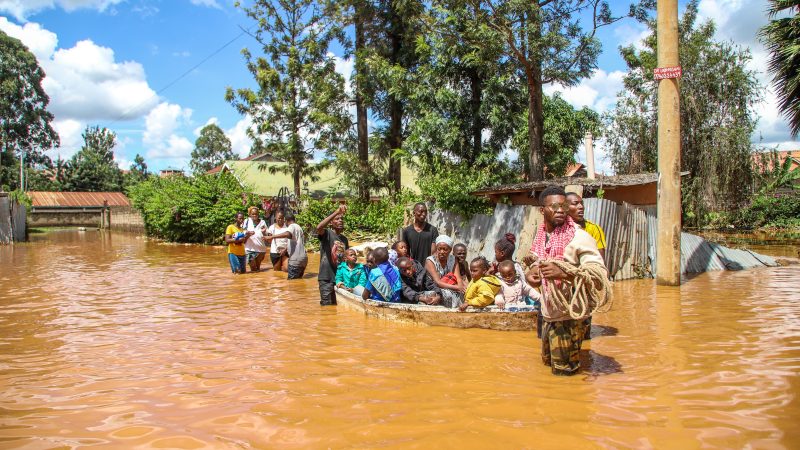
In Githurai, the floodwaters came with a quiet menace, creeping into homes in the dead of night. By dawn, the neighborhood was unrecognizable. Concrete walls stood half-drowned, while belongings floated aimlessly in the brown currents. Women clutched their children, stranded in their now-flooded homes, their faces painted with fear as the water climbed higher. Many had spent the now Ling nights on their rooftops. Everything in their houses was now underwater.
Amid the chaos, a canoe appeared, a makeshift rescue vessel, navigated by local youth. The boat cut through the water, moving door to door. Mothers wrapped their babies in blankets, pressing them close to shield them from the cold. The canoe bobbed as frightened faces peered out from windows, their eyes reflecting both relief and terror. One woman, her voice shaking, whispered, “I didn’t think we would make it.”
The air was heavy with the smell of dampness and despair, but in that small canoe, there was hope; a fragile lifeline against the rising tide.
In the labyrinth of Mathare slums, the floodwaters spared no one. Narrow alleyways became rivers, and homes built on fragile foundations crumbled under the pressure. Children waded through waist-high water, their small hands clutching plastic containers to keep whatever possessions they could salvage dry.
Among them was Aisha, a single mother of three, who watched helplessly as the water swallowed her bed and stove. “Everything is gone,” she murmured. But even in her loss, she found strength. Neighbors formed human chains, passing supplies from hand to hand bread, bottled water, and clothes; whatever they could gather to help one another survive.
Langata Road, one of Nairobi’s busiest arteries, became a dividing line between those who could drive away and those left stranded. Cars floated like paper boats, their horns silenced by the water. Commuters stood huddled under bus shelters, watching the floodwaters rise, unsure whether to wade through or wait it out.
On the bridge near Wilson Airport, a group of boda boda riders turned into unexpected heroes. They carried stranded passengers one by one across the flooded road, charging nothing but gratitude. “We are all in this together,” one rider said, his clothes soaked through. “If we don’t help each other, who will?”
The floods laid bare the fragile infrastructure of Nairobi, exposing the cracks in a city already stretched thin by the effects of climate change. Yet, in the midst of the disaster, the human spirit endured. Strangers became rescuers. Communities became families. And amid the murky waters, stories of quiet heroism emerged; stories that deserve to be told.
As the rains subside and the waters recede, Nairobi will rebuild. But the memories of these days; the fear, the loss, and the small acts of kindness – will linger long after the floodwaters are gone.
The Hunt for Medals, Not Lions in the Maasai Olympics
At dawn, the snow-capped peak of Mount Kilimanjaro rises majestically over the small town of Kimana. Its grandeur is a quiet reminder of the enduring spirit of the land and its people. I arrive at the Kimana Sanctuary, home to the annual Maasai Olympics, a groundbreaking event that replaces a centuries-old tradition of lion hunting with athletic competitions.
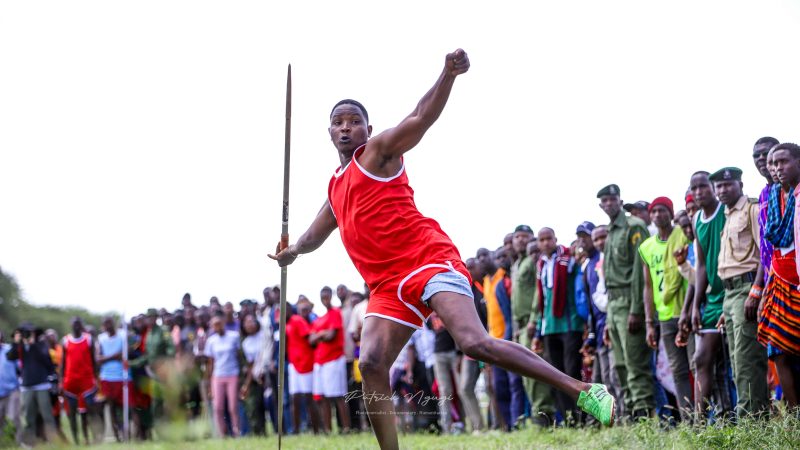
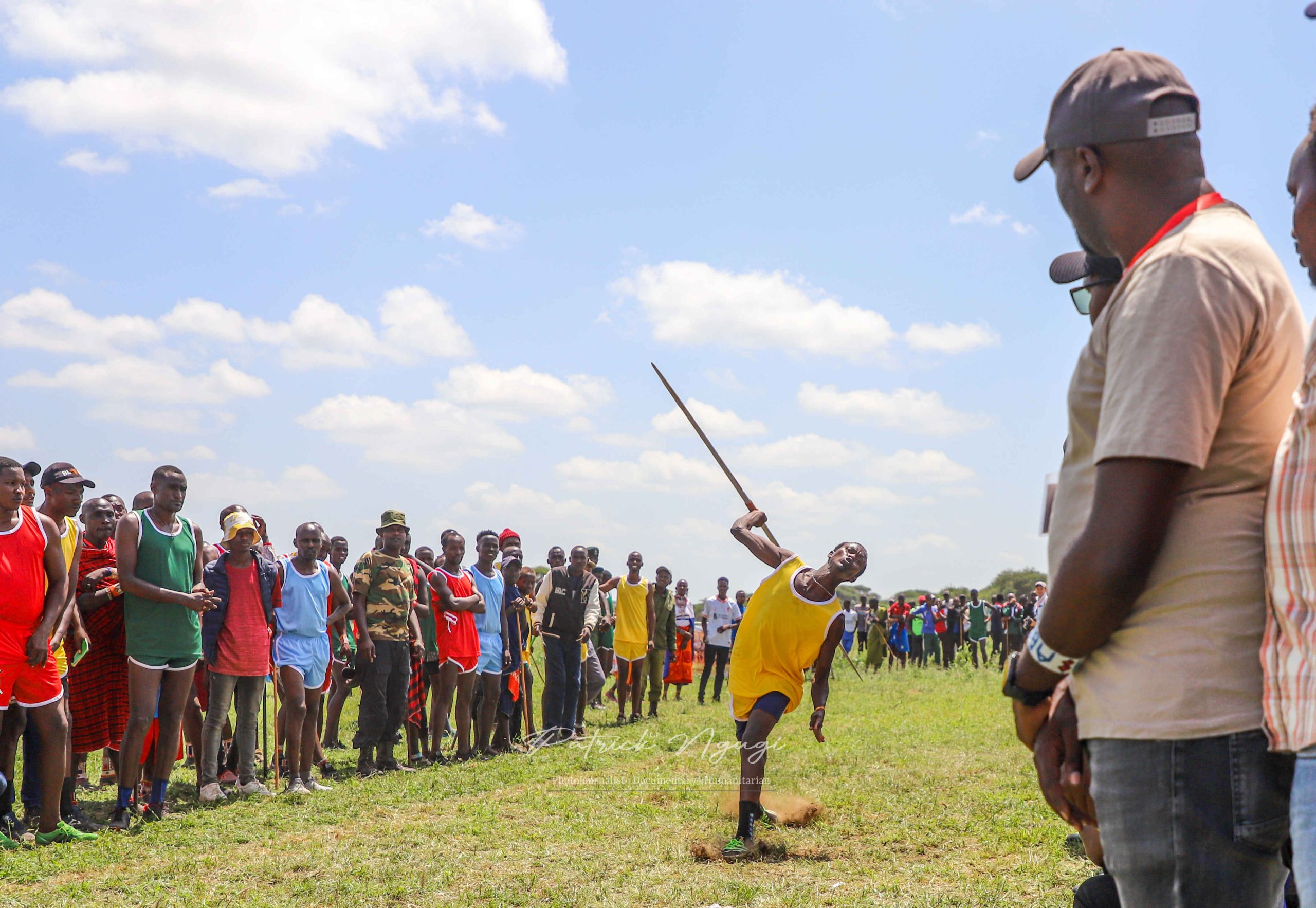
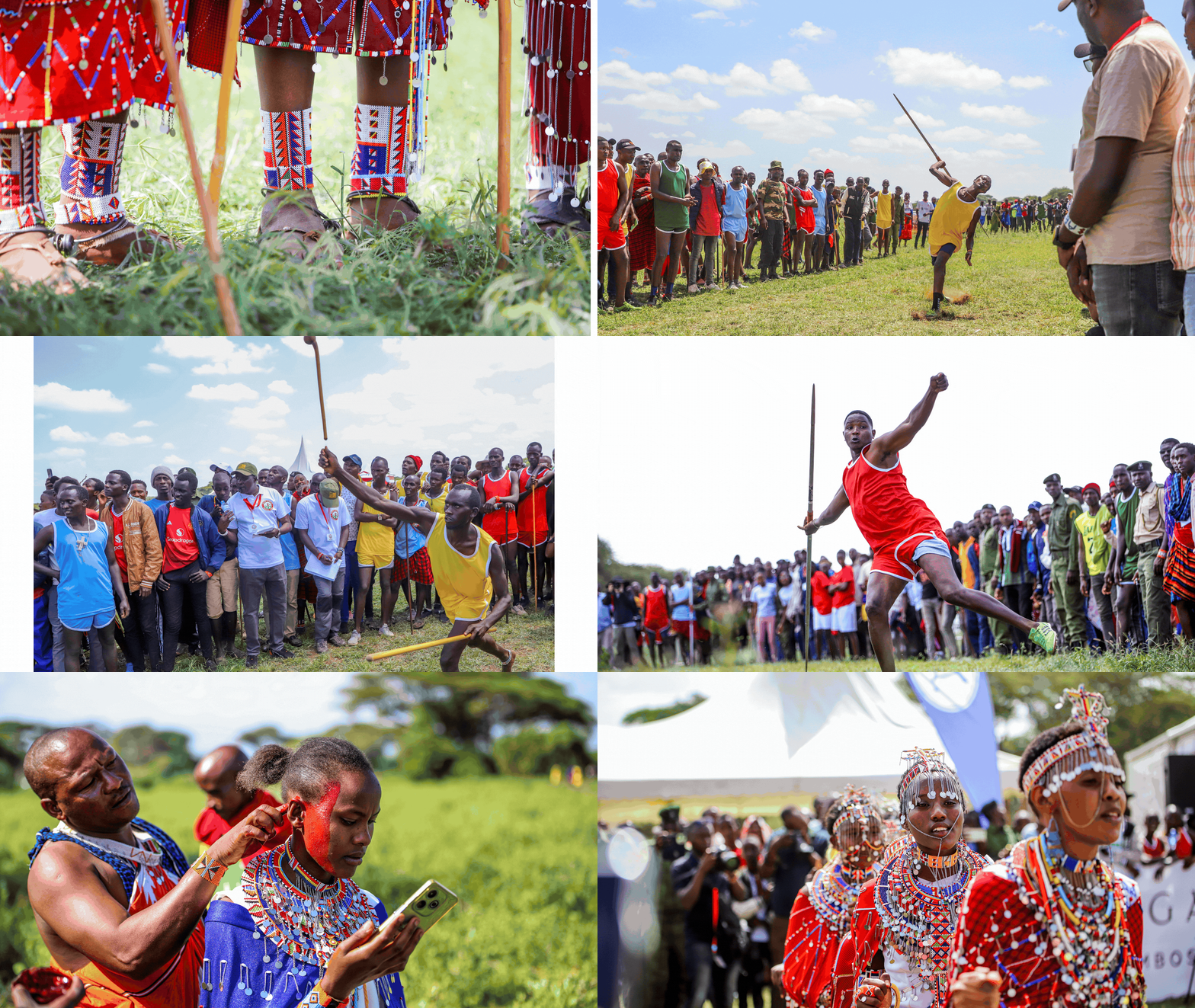
A Maasai Moran throws a Javelin spear during the Maasai olympics 2024
The Maasai, renowned as Africa’s most iconic tribe, have long been celebrated for their bravery and warrior culture. Yet, this tradition came at a high cost, both for the lions and the delicate ecosystem they inhabit. The Maasai Olympics, established in 2012, represent a transformative shift in how the Maasai morans (warriors) demonstrate their might and prestige. Instead of hunting lions to mark their passage into manhood, they now compete in events that highlight their traditional warrior skills, all while embracing conservation.
Mount Kilimanjaro is the Witness today
The journey to the event is striking. I cross acres of bean irrigation farms before arriving at the sanctuary nestled near a seasonal river, its culvert straining under the weight of silt. The Maasai’s vibrant shukas and intricate beadwork stand out against the dry savannah landscape. Here, tradition meets modernity, as warriors prepare to compete, not for survival, but for glory and conservation.
The day begins early. Groups of Maasai huddle over steaming bowls of soup, having traveled from their manyattas (villages) to spend the night here. The scent of roasted meat lingers in the air, a nod to their deep cultural ties to cattle. But today, the focus is not on feasting; it’s on proving themselves in the arena.
Maasai faces Dressed with the spirit of Competition.
Four manyattas; Kuku, Mbirikani, Eselenkei, and Rombo compete for the top prize: a breeding bull, a symbol of wealth and prestige. Each village dons a different color, their warriors exuding energy and determination. The events kick off with the 200-meter races, where Rombo takes an early lead. The crowd cheers wildly as Joseph Lekatoo, a 34-year-old veteran of the games, dominates the javelin and high jump events.
“The Maasai Olympics keep us busy,” Lekatoo says, clutching his two new medals. “It’s no longer about who can kill the most lions. It’s about competing for medals and cash prizes, and protecting our heritage.”
For Lekatoo, the event is more than just a competition. It’s a powerful reminder of the importance of conservation, a cause championed by Big Life Foundation, the organization behind the Maasai Olympics. As lion populations dwindle due to habitat loss and human-wildlife conflict, this initiative offers a way to preserve not only the lions but also the Maasai way of life.
An Olympic event set with deep roots in Traditions.
Each event reflects the traditional skills of the Maasai warriors. The rungu (club) throwing competition showcases precision and strength, while the high jump; a unique Maasai tradition; demonstrates agility and grace. In the long-distance races, endurance takes center stage, mirroring the stamina required of warriors who once roamed these plains.
A Maasai Warrior Throws a rungu(Club) as a Sporting event during the Maasai Olympics 2024
As the sun blazes fiercely overhead, the warriors push themselves to their limits. The roar of the crowd rises with every victory, their excitement palpable. The atmosphere is electric, a blend of camaraderie and fierce rivalry.
A New Tradition Takes Root among the Maasai
The Maasai Olympics are more than just a sporting event, they are a celebration of resilience, adaptability, and hope. By replacing lion hunting with athletic competition, the Maasai have found a way to honor their traditions while embracing a sustainable future.
The event also fosters environmental stewardship. Beyond the thrill of competition, participants and spectators learn about the importance of protecting their land and its wildlife. Conservation is no longer an abstract concept; it’s woven into the fabric of the Maasai culture.
The Future of the Plains of Amboseli
As the games draw to a close, the warriors disperse, medals glinting in the late afternoon sun. The breeding bull, the ultimate prize, stands as a symbol of the Maasai’s commitment to their heritage and the environment.
Standing under the vast African sky, I am struck by the significance of this event. The Maasai Olympics are not just about winning medals, they’re about preserving a way of life, one that celebrates bravery, community, and the delicate balance between humanity and nature.
For the Maasai, the hunt for medals has replaced the hunt for lions. And for the lions, this shift may just be their saving grace.
Contact
Contact Me Today
Patrick Ngugi
Chief Photographer
Currently Based In Nairobi. I am available for freelance work. Travel Ready. You can Always reach me on contacts provided below.























 “The Maasai Olympics keep us busy,” Lekatoo says, clutching his two new medals. “It’s no longer about who can kill the most lions. It’s about competing for medals and cash prizes, and protecting our heritage.”