



An African Experiment in Climate Solutions Goes Global
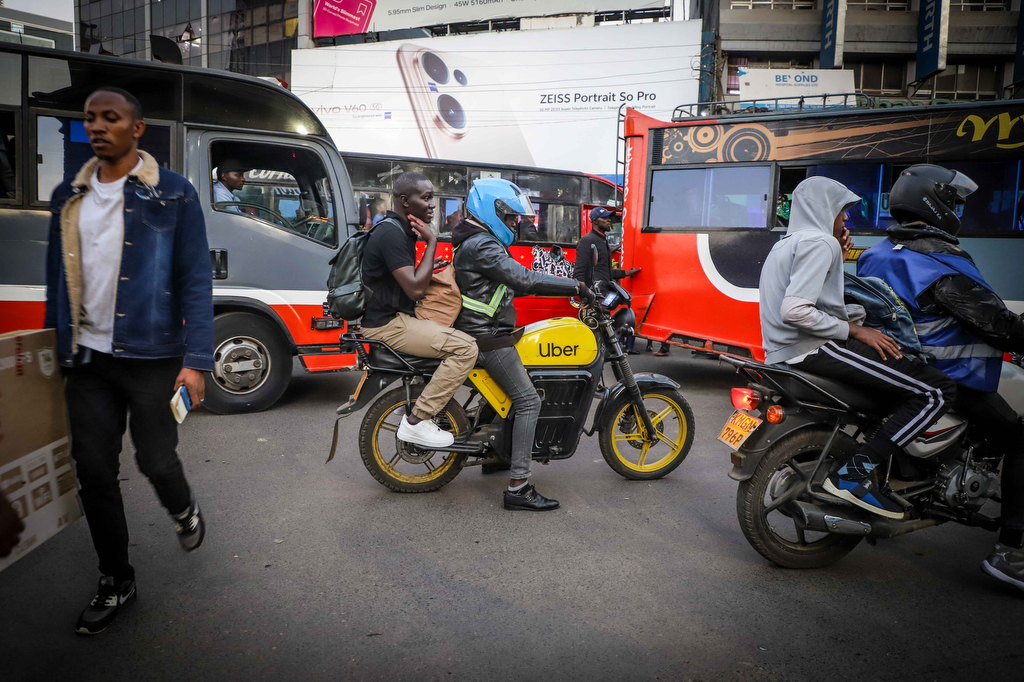
Nairobi — On a cool December morning in 2025, an electric boda-boda slips past the tree-lined perimeter of the United Nations complex in Gigiri. Delegates arriving for the seventh United Nations Environment Assembly pause briefly—not because the motorcycle is unusual, but because it is now a familiar part of Nairobi’s soundscape. Its quiet hum stands in stark contrast to the diesel engines that long defined the city’s transport rhythm.
In a way, the scene encapsulates a larger, more ambitious story: Kenya’s embrace of electric mobility has moved from fringe experiment to national project, unfolding at a pace that has surprised even policy analysts who track the sector.
The numbers tell part of that story. Electricity consumption for EV charging grew more than 300 percent in a single year, reaching 5.04 GWh by mid-2025, according to Kenya Power. Registered electric vehicles—once fewer than 500 in 2022—now exceed 9,000, with the government aiming for EVs to make up 5 percent of all new vehicle registrations by the end of 2025.
These figures place Kenya among Africa’s fastest-growing EV markets on a per-capita basis—though experts note Rwanda still outpaces Kenya in regulatory clarity and incentives.
As UNEA-7 convenes under the theme “Advancing sustainable solutions for a resilient planet,” Kenya arrives not simply as host, but as a case study. A living laboratory. A reminder that climate solutions are not theoretical; they exist on the streets outside the UN gates.
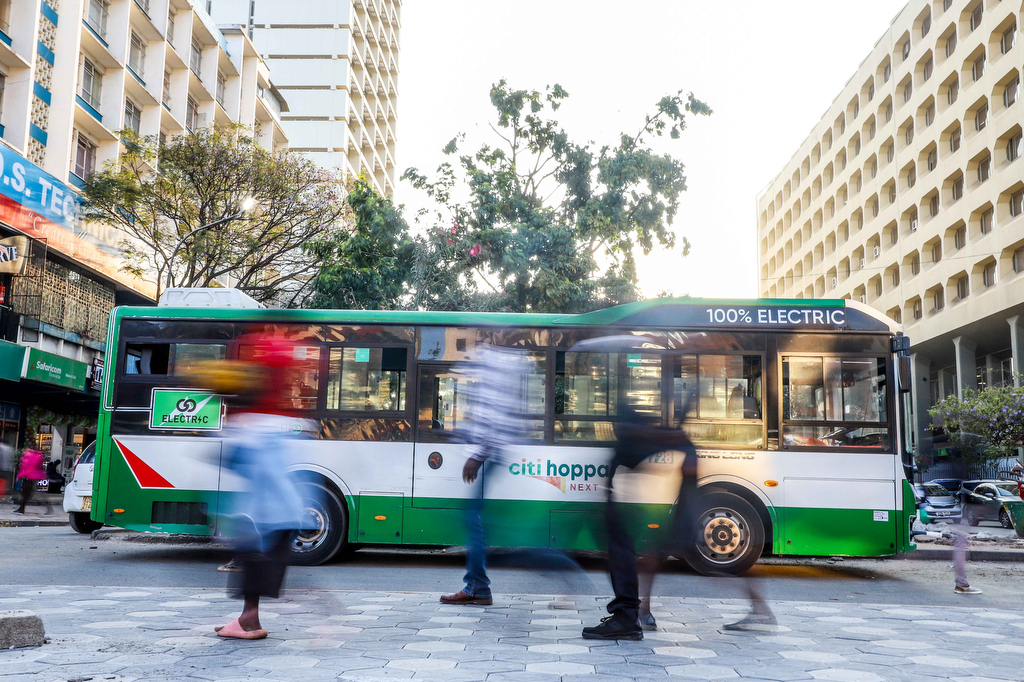
As an accredited photojournalist documenting this year’s Assembly, I will be tracking that story visually—how global policy conversations intersect with real-world transitions already underway in Nairobi.
Why UNEA-7 Matters Now
UNEA-7 arrives at a strategic moment in global environmental diplomacy. It follows the Pact for the Future and precedes COP-30 in Belém, two milestones pushing governments toward stronger climate alignment.
Diplomats expect three outcomes with direct implications for mobility:
-
Global guidelines for sustainable urban transport,
-
Reinforced commitments to phase out fossil-fuel subsidies, and
-
A Medium-Term Strategy (2026–2029) that shifts focus from promises to execution, particularly in developing nations.
For delegates, Kenya’s streets—cluttered with the familiar green Roam motorcycles and the growing presence of BasiGo buses—offer a rare opportunity to see how policy translates into everyday mobility.
An Unlikely EV Surge: 2022–2025
Kenya’s electric transition has been uneven, but undeniably fast.
EVs Registered:
-
2022: <500
-
2023: ~1,200
-
2024: ~4,500
-
Mid-2025: >9,000
Transport experts caution that Kenya’s trajectory is still fragile and dependent on policy continuity. Yet the sector’s composition suggests broad uptake beyond wealthy urban drivers:
-
60%: Electric motorbikes and tuk-tuks
-
25%: Passenger cars and SUVs
-
15%: Buses and minibuses—the fastest-growing segment
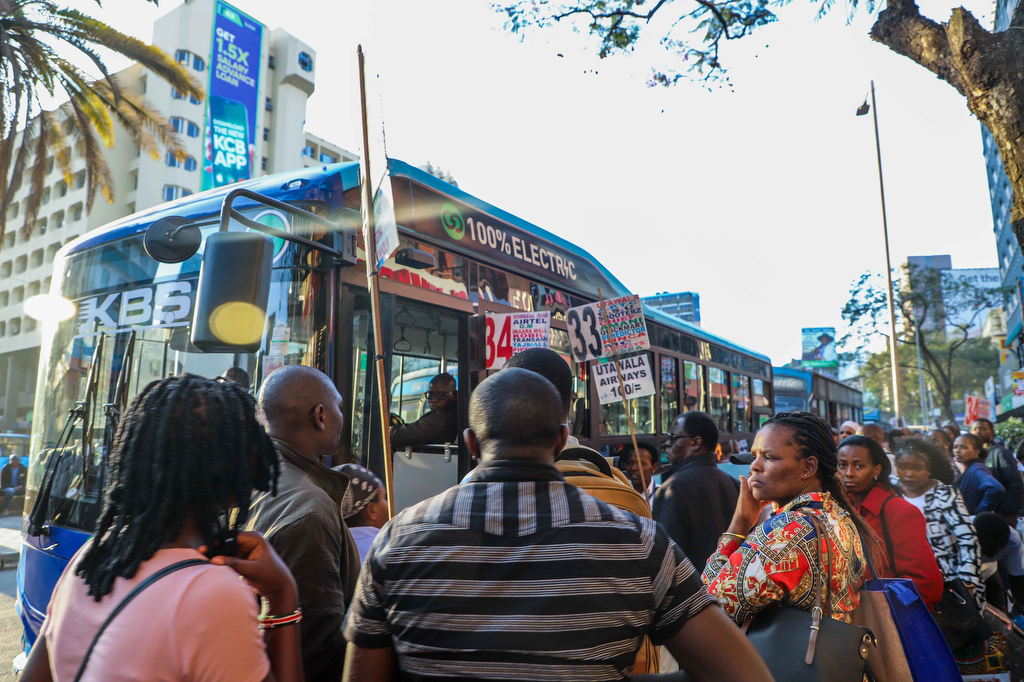
The bus category reveals perhaps the clearest shift in public transport economics. Operators say electric buses slash fuel and maintenance costs, crucial in a city where margins are tight.
Milestones Reshaping Nairobi’s Mobility
1. BasiGo
By December 2025, BasiGo is expected to deploy more than 100 electric buses, operating through a lease-to-own model that shields SACCOs from high upfront costs—one of the largest barriers in the sector.
2. Roam
In early 2025, Roam completed a 1,600-kilometre EV ride from Mombasa to Kampala, demonstrating the region’s growing charging corridor. Its assembly plant in Nairobi is among the largest EV manufacturers in East Africa.
3. Matatu SACCO Adoption
Operators like Super Metro, Latema, and Citi Hoppa have begun integrating electric buses. Some regional routes—including those connecting to Nyeri and Nyahururu—now feature pilot charging stations.
Transport workers, however, highlight ongoing challenges. “The buses make sense, but the price doesn’t,” said Samson Ndung’u, a driver with Latema SACCO. “Most operators can only afford them through leasing.”
This kind of tension—between technological optimism and economic reality—defines Kenya’s current phase of electrification.
The Policy Architecture Behind the Shift
Kenya’s EV boom did not materialize on goodwill alone. It is the product of targeted fiscal and energy policies.
Fiscal Incentives
Finance Acts of 2023 and 2024 introduced:
-
Excise duty cuts (20% → 10%)
-
VAT exemptions on EVs and charging equipment
-
Zero-rated import duty on battery packs
These changes helped reduce costs, though market prices remain high due to global supply limits and local dealership margins.
Energy-Sector Support
Kenya Power’s off-peak EV tariff (KES 12/kWh) lowered charging costs for businesses. Solar-EV integration is growing, particularly in industrial zones and peri-urban estates.
Yet energy analysts warn of contradictions. President Ruto recently acknowledged that Kenya may need power rationing due to supply-demand imbalances—a disclosure that sparked debate about whether the grid can support widespread electrification without major upgrades.

E-Mobility Policy (2024 Draft)
Expected to be adopted in 2025, the policy targets:
-
5% EV share of new registrations in 2025
-
30% by 2030
-
Incentives for local assembly and battery innovation
If approved, the framework would become one of the region’s most detailed EV policy documents.
Where Kenya’s Experience Meets UNEA-7 Priorities
Kenya’s story resonates with several themes shaping UNEA-7.
A. Integrated, Low-Carbon Systems
With a grid already over 90% renewable, Kenya’s EVs carry some of the lowest lifecycle emissions globally—an outcome many wealthier countries have yet to achieve.
B. Equity and Accessibility
Electric mobility here is less about private cars and more about:
-
Affordable boda operations
-
Lower matatu fares
-
New jobs in assembly, maintenance, and software
-
Youth-led startups in battery recycling
C. Financing Innovation
Kenya offers workable models for developing countries:
-
Pay-as-you-go purchases
-
Battery-swapping
-
Leased EV buses
-
Blended finance from AfDB, EIB, and the Green Climate Fund
D. Public Health Gains
Air-quality data from pilot corridors shows early improvements in PM2.5 concentrations, though independent verification is underway.
What UNEA-7 Will Showcase
Kenya plans to use this year’s Assembly as a national exhibition.
Expected features include:
-
Electric shuttles for delegates
-
An “EV Safari” demonstration on UN grounds
-
Youth-led innovation tents
-
Public transport pilot routes near Gigiri
Officials say the aim is to present electric mobility not as an aspiration, but as an active system that can be scaled across the Global South.
Lessons Emerging for the Developing World
Several conclusions are already evident:
-
Electrification is possible without a high national income.
Kenya’s GDP per capita—about $2,100—has not prevented rapid EV growth. -
Two- and three-wheelers remain the most efficient entry point.
-
Policy clarity and private-sector freedom are more important than perfect infrastructure.
-
Regional alignment—especially within the East African Community—reduces costs and strengthens supply chains.
The Friction Points Ahead
Experts caution against over-romanticizing Kenya’s progress.
-
Grid bottlenecks persist, especially outside urban centers
-
Financing gaps remain a barrier for public transport electrification
-
Second-life battery planning is still in its infancy
-
Rural inclusion remains limited, with most charging infrastructure concentrated around Nairobi and Mombasa
Without long-term planning, Kenya risks creating pockets of progress rather than a nationwide transition.
From Nairobi to the World
Kenya’s electric mobility revolution is reshaping perceptions of what climate action can look like in lower-middle-income nations. The country offers a rare combination of policy ambition, private-sector improvisation, and citizen-level adoption.
As UNEA-7 delegates gather in Nairobi, the city’s roads will serve as a backdrop to global deliberations—and a reminder that the transition to cleaner mobility does not lie in the distant future. It is already unfolding, quietly, on the streets.
A Call to Action
Delegates are expected to debate two proposals that echo Kenya’s own trajectory:
-
A global EV adoption framework with realistic timelines
-
A UNEP-led E-Mobility Acceleration Facility tailored to the Global South
If adopted, they would turn Nairobi’s lived experience into a global blueprint.
For now, the silent hum of electric transport in Kenya speaks for itself:
the shift is real, and it is accelerating.