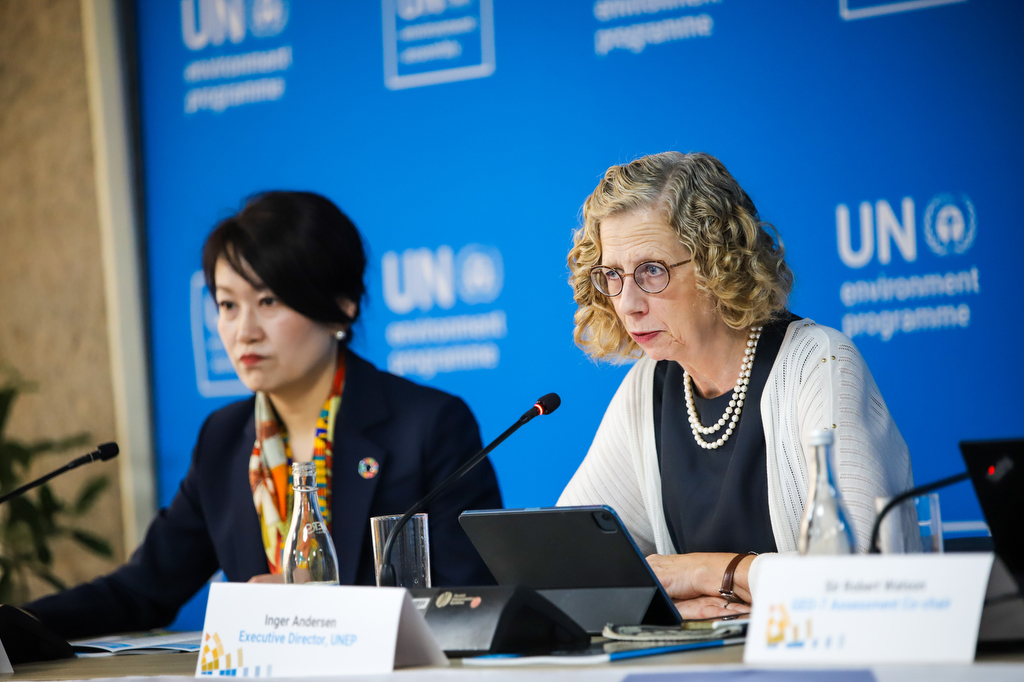



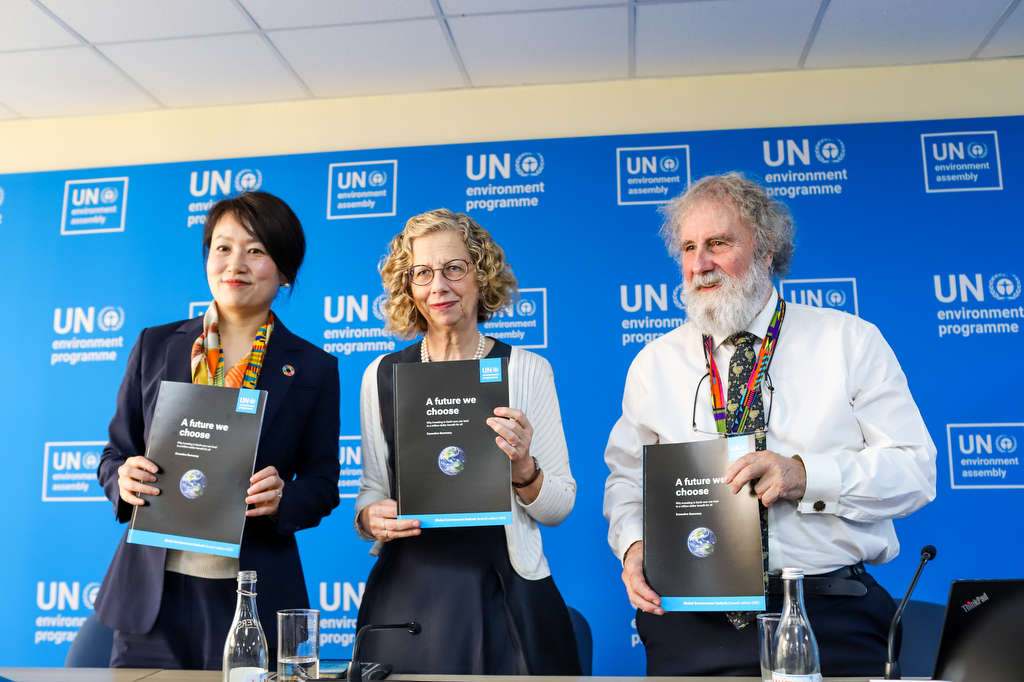
UNEA-7, DAY 2. Inside the UN Environment Assembly press room, three people walked to the podium carrying identical black-and-blue reports. They paused for just a second (long enough for the cameras to click) before the questions started flying.
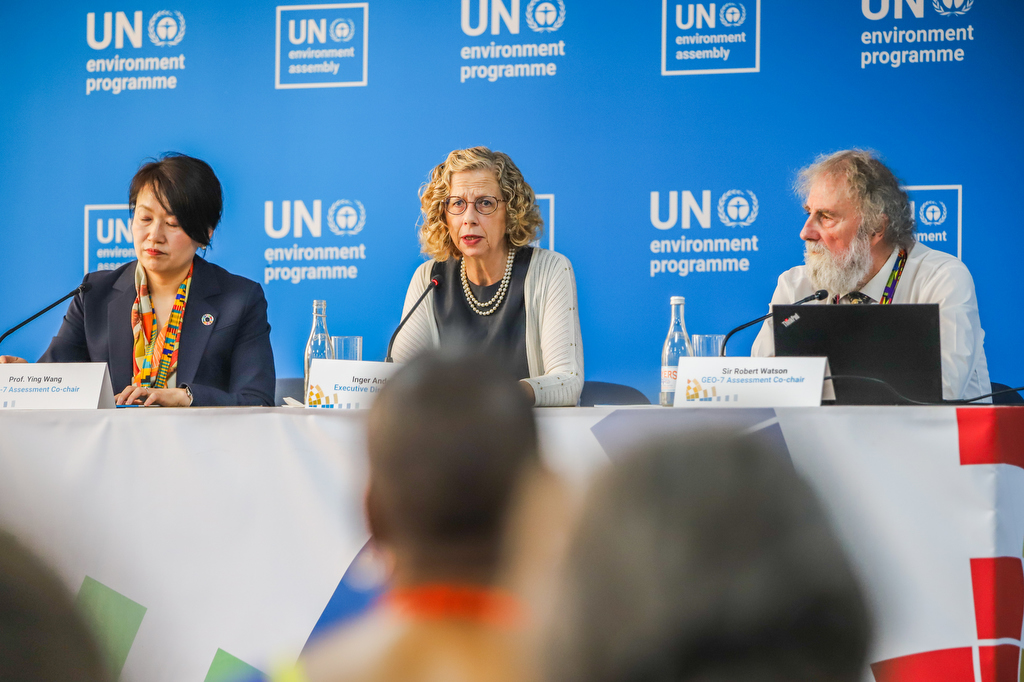
In the middle was Inger Andersen, head of the UN Environment Programme (UNEP). On her left and right were two of the scientists who spent years writing the report they were holding: the seventh Global Environment Outlook, or GEO-7 for short.
Inger got straight to the point.
“The future is not already written,” she said. “But the window to write a better one is closing fast.”
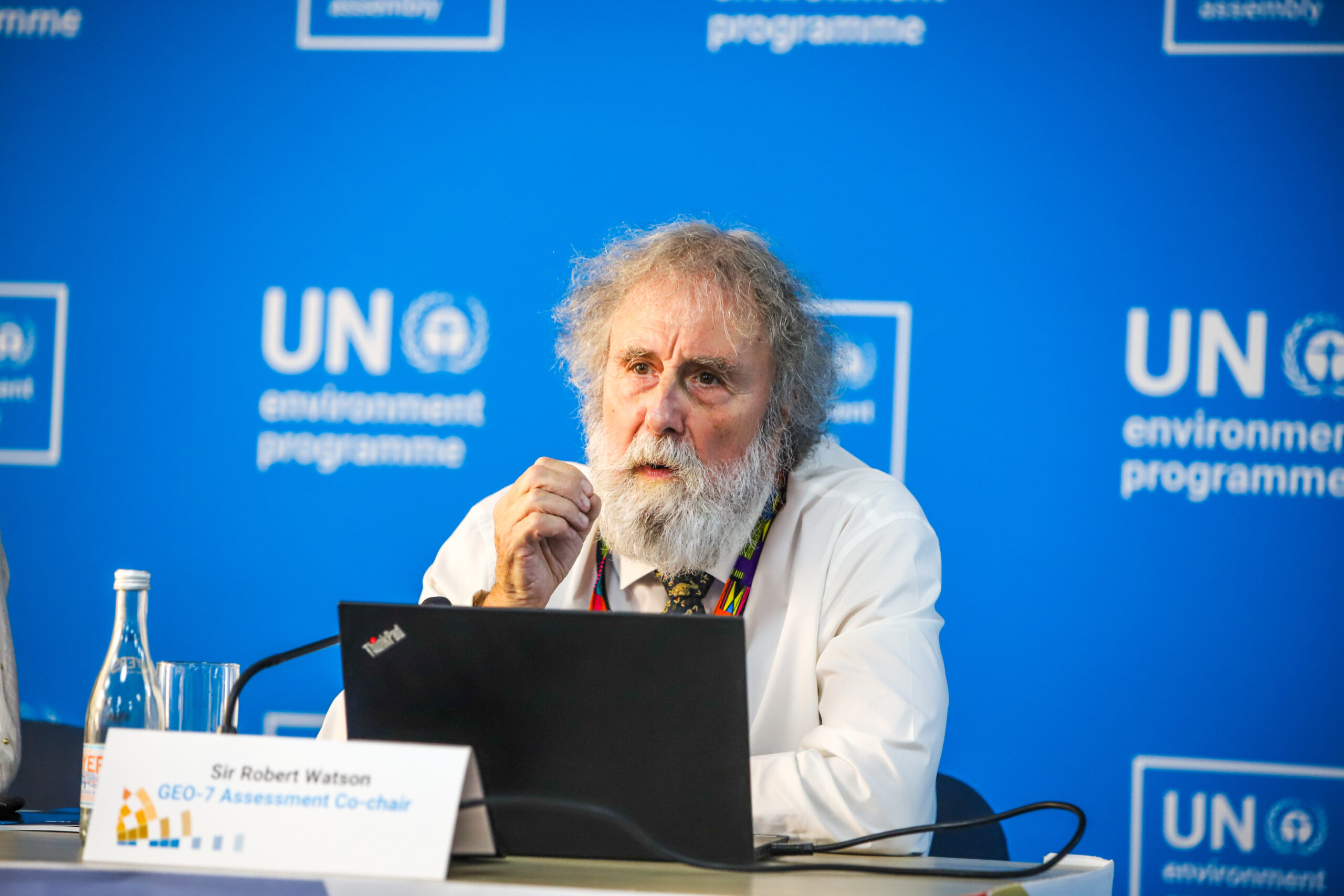
Sir Bob Watson (yes, the same Bob Watson who’s been warning the world about climate and biodiversity for over 40 years) stood next to her. He’s not one for drama, so when he spoke, everyone listened.
“If we get this right,” he said, “we’re not talking about saving a few billion dollars. We’re talking trillions (every single year) once we fix energy, food, materials, finance, and nature.”
The numbers in GEO-7 are brutal, but they come with a surprisingly hopeful twist.
Right now:
- 9 million people die every year from pollution.
- 40% of the planet’s land is degraded.
- 1 million species are on the brink.
- Extreme weather is already costing us around US$300 billion a year (the report uses updated figures).
Keep going like this, and things get much worse.
Or we can change course.
The report maps out two realistic ways to do it: one leans hard on new technology, the other on changing how we behave. Either way, the big payoffs start showing up by 2050 (inside the lifetime of most people reading this).
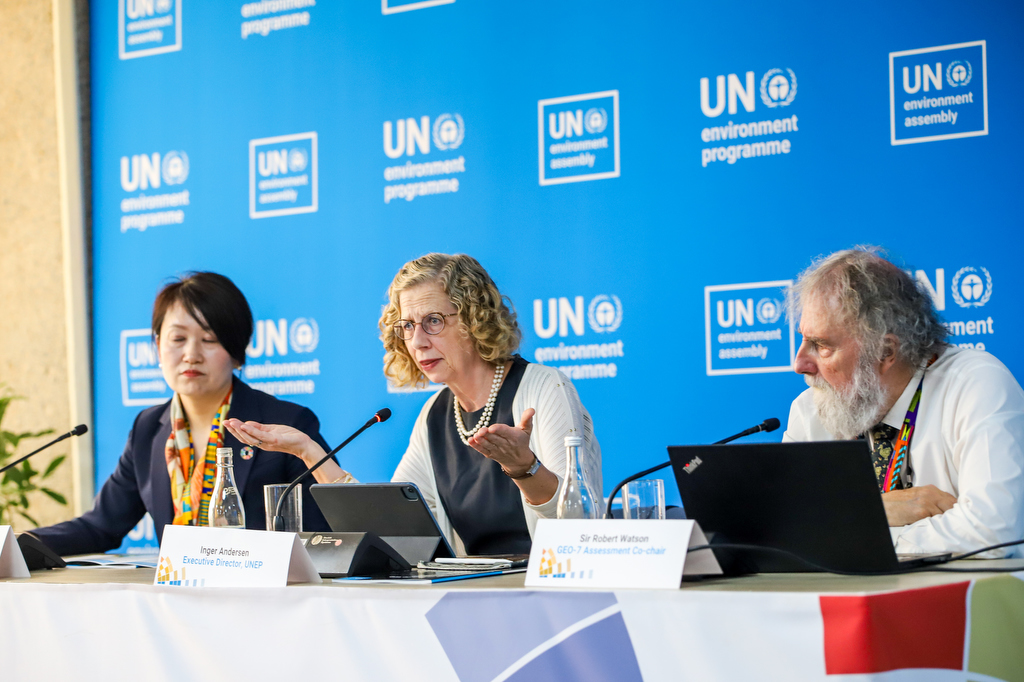
If we make the shift, the world could see at least $20 trillion in annual benefits by 2070, plus millions of lives saved from dirty air, poisoned water, and collapsing ecosystems.
Bob Watson put the choice bluntly: “The cost of doing nothing is way higher than the cost of change. Always has been.”
taking photos, moving between the podium and the rows of journalists. What stayed with me wasn’t the slides or the statistics; it was the mood in the room. These weren’t activists shouting slogans. They were scientists and officials who’ve seen every climate meeting for decades, and they still sounded like they believed we can do this.
Inger Andersen said the quiet part out loud:
“We already have the tools and the agreements. What we’re missing is the political courage to use them.”
That’s it. That’s the whole story of GEO-7.
It’s not a prediction of doom. It’s a menu. Two paths that work, laid out by 287 experts from 82 countries after six years of work. One path keeps heading toward breakdown. The other actually makes us richer, healthier, and keeps the planet livable.
We still get to pick.
Walking out of the conference hall, camera slung over my shoulder, I kept thinking the same thing:
This wasn’t just a report launch.
It felt like the moment the world was handed a map (and asked, very politely but very firmly, to choose the right road before the junction disappears).